


Renters Insurance for a Tampa Apartment and Storage Unit
The storage-unit limit may be lower than the personal-property limit for your apartment. Renters insurance for an apartment with a storage unit in Tampa may cover belongings kept off-site, but only for losses covered by the policy. A separate limit may apply to items in storage.
It’s natural to focus on the total personal-property coverage when comparing policies. But details that shape protection for stored belongings, including off-premises limits, covered losses, exclusions, and deductibles, can matter just as much.
This guide explains what renters insurance covers, how storage-unit coverage works, and what may fall outside the policy. It also shows how to compare quotes by looking beyond the premium to the terms that affect your apartment and stored belongings.
Table of Contents
What Perils and Damages Are Not Covered in Storage Units?
Renters insurance generally protects a renter’s personal property, not the apartment building. The landlord’s insurance covers the building, while the renter’s policy may address belongings, personal liability, and other covered losses. Coverage can extend beyond the apartment, including to a storage unit or belongings temporarily kept while traveling. However, off-site protection depends on covered losses and policy limits, not simply where an item is located.
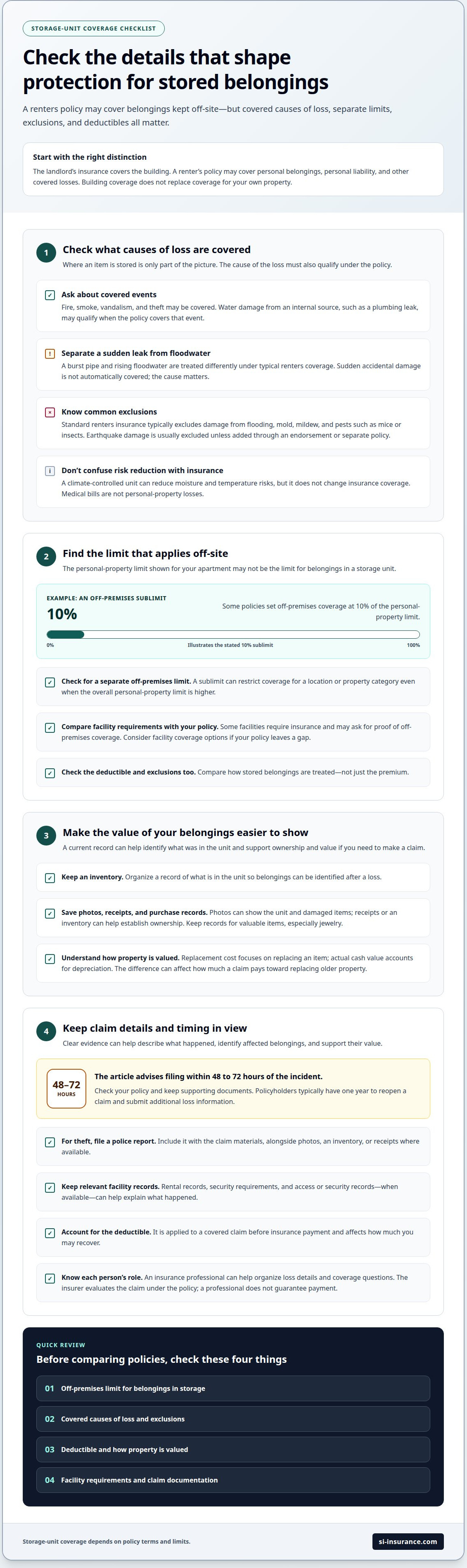
For example, a policy may cover stored belongings damaged by fire, smoke, vandalism, or theft. Water damage from an internal source, such as a plumbing leak, may also qualify if the policy covers that event. Sudden accidental damage is not automatically covered. The cause of loss matters: a burst pipe and rising floodwater are treated differently under typical renters coverage. A landlord’s building policy also does not replace the renter’s own property coverage.
Common exclusions can leave substantial gaps in storage-unit coverage. Standard renters insurance typically excludes damage from flooding, mold, mildew, and pests such as mice or insects. Earthquake damage is usually excluded unless the policyholder adds an earthquake endorsement or separate policy. A climate-controlled unit can reduce moisture and temperature risks, but it does not change insurance coverage. Medical bills are not personal-property losses, so they should not be confused with claims for damaged belongings.
Belongings stolen from a vehicle while traveling may be covered, as may theft away from the apartment, subject to policy terms. That does not mean every loss during a trip qualifies: the cause must be covered, and applicable limits still matter. For instance, theft from a car differs from mold damage to items left in a storage locker.
Should you buy the storage facility’s insurance or rely on renters insurance? Compare the facility’s requirements with your policy’s off-premises limits, exclusions, and deductible. Some facilities require insurance and may ask for proof of off-premises coverage. Consider facility coverage options if your existing policy leaves a gap.
How a Professional Can Help With a Claim for Storage-Unit Losses
A storage-unit claim depends on both the policy terms and clear evidence of what happened. An insurance professional can help organize the loss details, documentation, and coverage questions before you submit a claim.
How a Professional Can Help File a Renters Insurance Claim
An insurance professional can help connect reported damage or theft to the policy’s coverage terms and limits. That review can be useful when a storage-unit loss involves several belongings, such as electronics, or when the cause is disputed. The renter supplies policy information, a description of what was lost, and evidence of ownership and value. The insurer evaluates the claim under the policy; the professional does not guarantee payment.
Claim Documentation and Timing
Claim documentation is the evidence used to describe the loss, identify affected belongings, and support their value. Photos of the storage unit and damaged items can show the condition after the incident, while receipts or an inventory can help establish ownership. If theft occurred, file a police report and include it with the claim materials. File within 48 to 72 hours of the incident, and retain supporting documents because policyholders typically have one year to reopen a claim and submit additional loss information.
Deductibles and Security Requirements
A deductible is the amount applied to a covered claim before insurance payment, so it affects how much you may recover for damaged or stolen property. Insurers may require evidence of ownership, value, and the event; facility security requirements can also matter. Some storage facilities require renters insurance and may ask for proof of off-premises coverage. Provide relevant rental and facility records with the claim.
Insurers may request photos, an inventory or receipts, and a police report after theft to document the loss. Facility access or security records can also help explain what happened when available. For a broader review of renters insurance coverage, consider how storage-unit limits and claim documentation fit together.
Renters insurance for personal property in a storage unit
Renters insurance for an apartment with a storage unit in Tampa should account for how belongings are valued and whether separate limits apply off-site. A current inventory can help you match the property you keep in storage with the protection described in your policy.
Valuing Personal Property and Replacement Cost
Valuation describes how an insurance policy determines the amount for a covered loss. Replacement cost focuses on replacing an item, while actual cash value accounts for depreciation. The difference can affect how much a claim pays toward replacing older property. Keep receipts or purchase records for valuable items, especially jewelry, to make ownership and value easier to document if you need to file a claim.
Storage Unit Personal Property Sublimits
A sublimit restricts coverage for a specific location or property category, even if the overall personal-property limit is higher. Some policies set off-premises coverage at 10% of the personal-property limit.
Professional Guidance on Theft and Property Damage Claims
An insurance professional can help interpret how policy terms apply to a claim involving stored property. You can provide an inventory and any available records, while the professional helps organize the information for review. The cause of loss, applicable limits, exclusions, and deductible all factor into the insurer’s evaluation. Personal liability protection is separate from coverage for damaged or stolen belongings.
Preparing a Personal Property Inventory for a Storage Unit
An inventory creates a clear record of what is in the unit and helps identify property after a loss. Organize entries by category, such as furniture, electronics, and jewelry, and include descriptions, photographs, and receipts when available. Note each item’s condition and identifying details. Update the list as belongings move in or out, so it reflects the storage unit’s current contents.
Comparing Renters Insurance Quotes With an Insurance Professional
For renters insurance for an apartment with a storage unit in Tampa, compare quotes for both the apartment and stored belongings. An insurance professional can review policy terms alongside premiums, helping you understand differences in limits, exclusions, and deductibles before choosing coverage.
Start with the personal-property limit, then look for any separate cap on belongings kept away from the apartment. A renter storing furniture, electronics, and jewelry may find that quotes treat these categories differently. An insurance professional can also explain whether a policy uses replacement cost or actual cash value, which accounts for depreciation. That distinction affects how a covered loss is valued.
Compare the causes of loss each policy covers. Standard renters insurance typically excludes flooding and earthquake damage, while covered events may include theft, fire, vandalism, or water damage from an internal leak. Policy wording determines whether theft from a storage unit qualifies. A landlord’s building insurance does not cover a tenant’s personal property.
Pay attention to deductibles, too. A lower deductible may come with different limits or terms, so weigh the full policy rather than focusing on one feature. An insurance professional can lay out the key differences:
Personal-property limits and off-premises sublimits.
Covered events, exclusions, and separate caps for valuable property.
Deductibles and replacement-cost or actual-cash-value terms.
How the policy treats belongings in storage or during travel.
An inventory and details about your storage arrangement can make the comparison more relevant. Someone storing seasonal clothing may prioritize different terms than a renter keeping furniture and jewelry off-site. Use those details to focus the conversation, then review renter insurance options that align with your priorities.
SI Insurance: Renter Insurance
SI Insurance offers Renter Insurance for Tampa renters reviewing protection for apartment belongings and property kept in storage. A conversation about your storage unit, personal-property inventory, and valuable items can help frame the coverage limits and policy terms that matter to your situation. Pay particular attention to off-premises limits, covered causes of loss, exclusions, and deductibles, rather than considering the apartment limit alone. If you’re comparing quotes or arranging coverage for a new rental, contact SI Insurance to discuss renter insurance options. Bring the questions raised by your comparison, such as how stored belongings are treated or whether separate limits apply. Contact SI Insurance to discuss renter insurance for your apartment and storage unit.
Make Your Next Coverage Review Count
For renters insurance for an apartment with a storage unit in Tampa, review your coverage based on how your household uses both spaces, not just what is listed on your current policy. A move, a change in stored property, or a new high-value purchase can be a good reason to revisit your coverage needs. Clear priorities make the next insurance conversation more focused.
Before that conversation, consider what you want your policy to address and which belongings matter most to protect. This gives the discussion a practical starting point and helps align your coverage decisions with your current living arrangements.
Contact SI Insurance to discuss renter insurance and clarify your priorities.
Frequently Asked Questions
What is renters insurance?
Renters insurance is a policy that can protect a tenant’s personal belongings and provide personal liability coverage. For example, it may help with a covered loss involving furniture or clothing, while liability coverage addresses certain claims involving accidental injury or damage to someone else’s property. It does not insure the apartment building itself. A roommate’s belongings generally need separate coverage unless the roommate qualifies under the policy or is named.
What is extra coverage for high-value items?
Extra coverage protects particular valuable belongings beyond a standard policy’s limit. It may matter if an item, such as an engagement ring or collectible, exceeds the policy’s per-item or category sublimit. Policy wording determines whether additional coverage is available and how the item must be identified. An appraisal or receipt can help document its description and value when reviewing options.
How can an insurance professional help me file a claim?
An insurance professional can help organize the information needed to present a claim and explain how the policy applies. For a damaged television, for example, useful records might include a purchase receipt, photographs, and a description of the incident. The insurer evaluates the claim under the policy terms. Clear documentation can help identify which belongings were affected, how the loss happened, and what evidence supports ownership.
Does renters insurance cover belongings stored in an apartment storage unit in Tampa?
A renters policy may cover personal belongings in a storage area at the apartment if the loss results from a covered event and the policy applies to that location. A Tampa renter should consider the unit’s location, access arrangements, and whether belongings are shared with anyone else. Coverage for a tenant’s property does not automatically extend to a roommate’s items, and exclusions can still apply.
Does renters insurance cover a storage unit located off-site?
Renters insurance may cover belongings in an off-site storage unit, but the policy can impose a lower limit for property kept away from the residence. Coverage still depends on the cause of loss and policy exclusions. For example, theft may qualify under the policy terms, while flooding or pest damage typically does not. Review how the policy defines covered property away from your rented home.
What coverage limits apply to belongings in a storage unit under renters insurance?
The full personal-property limit may not apply to belongings in storage. Some renters policies cap off-premises property at 10% of the personal-property limit, while item-specific sublimits may also restrict payment for certain categories. The applicable amount depends on the policy’s terms and the items involved. Compare the storage limit with the value of what you keep there, rather than relying only on the overall limit.
Comments