


Peace of mind home insurance for retirees in The Villages
Updated: 2 days ago
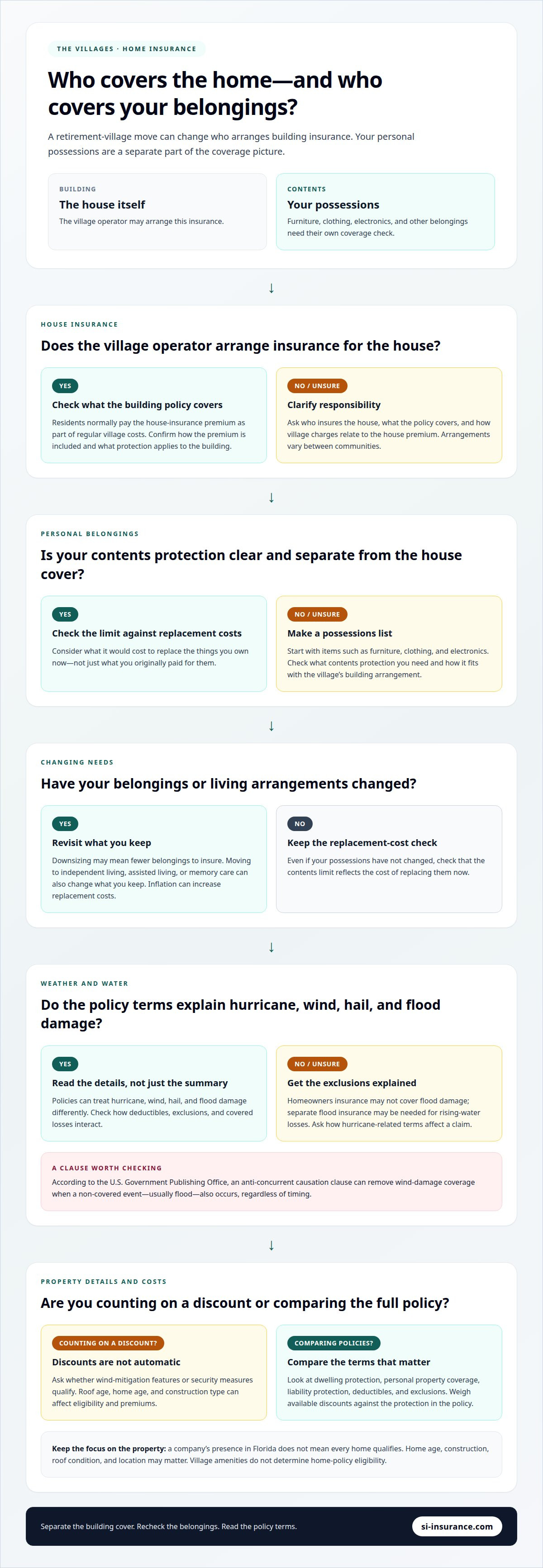
Moving into a retirement village can change who arranges insurance for your home, but your belongings still need protection. If you’re retiring in The Villages, start by distinguishing coverage for the building from coverage for your personal possessions.
A move can simplify some practical details of homeownership, but insurance arrangements vary between retirement communities. An operator may arrange insurance for the house, with the premium included in residents’ regular village costs. Contents insurance covers personal possessions, and the policy terms depend on the specific arrangement.
This guide explains how moving may affect your insurance, who usually arranges cover for the house, and what to consider about contents as your living arrangements change. It also outlines questions to ask about hurricanes, wind, and hail in The Villages, so you can understand the coverage that matters before deciding.
Table of Contents
What does moving into a retirement village mean for insurance?
Moving into a retirement village can change who arranges insurance for the home. Contents protection still matters, and arrangements vary between communities.
Contents Cover and Replacement Costs
Review the possessions you’ll bring, such as furniture, clothing, and electronics, and consider whether your contents limit reflects replacement costs rather than original purchase prices. Downsizing may mean fewer belongings to insure, while inflation can increase the cost of replacing them. Moving to independent living, assisted living, or memory care can also change what you keep in your new home.
Predictable Costs and Local Housing
Retirement villages may combine housing, utilities, dining, and amenities into predictable monthly costs. Operators typically arrange house insurance, with residents normally paying its premium as part of regular village costs. Local housing costs in The Villages inform your household budget, but don’t establish the replacement value of personal belongings. An insurance professional can keep those figures distinct while reviewing the home and contents arrangements.
Hurricane, Wind, and Hail Coverage
Homeowners policies can treat hurricane, wind, hail, and flood damage differently, so policy terms matter. Homeowners insurance may not cover flood damage; separate flood insurance may be needed for rising-water losses. According to the U.S. Government Publishing Office, an anti-concurrent causation clause can remove wind-damage coverage when a non-covered event, usually flood, also occurs, regardless of timing. An insurance professional can explain applicable deductibles and exclusions, including hurricane-related terms, and how they affect a claim.
Discounts and Home Eligibility Factors
Retiree discounts aren’t automatic. Ask whether wind-mitigation features or security measures qualify for available discounts. Roof age, home age, and construction type can affect eligibility and premiums because they help insurers assess how a home may withstand damage. For homeowners planning new residential projects or structural upgrades, working with an experienced design-and-build specialist like Wallpro System & Construction Inc highlights how sound construction practices contribute to long-term property durability. To manage premiums without dropping important protection, compare available discounts with coverage limits, deductibles, and exclusions. Amenities such as activities, fitness, or dining do not determine home-policy eligibility.
Responsibility for house insurance in retirement villages
A retirement village operator may arrange house insurance, with residents paying the premium as part of regular village costs, including monthly housing and amenity charges. In The Villages, check how this building coverage differs from insurance for your possessions.
A senior living community may offer independent living apartments, wellness programs, dining, and activities that help residents connect with others. These features shape lifestyle and comfort, but the village’s insurance arrangement determines who insures the home. Ask how the policy covers the building and what protection you need for your belongings.
Start by checking what the house policy covers, then make a separate list of your furniture, clothing, and electronics. Damage to a shared structure and damage to a resident’s sofa involve different property interests. Consider whether you own or occupy the home and how village charges allocate the house premium. This helps clarify responsibility without relying on assumptions about amenities.
A change in living arrangements can prompt another review. Moving from independent living to assisted living or memory care may change which belongings you keep. Check the house policy for structural coverage and reassess protection for your personal contents. Also confirm how the premium is included in monthly costs. The right arrangement depends on each resident’s circumstances.
Before moving, record your occupancy arrangement, the possessions you plan to keep, and any questions about shared areas. This information can help you understand how village-arranged house insurance relates to coverage for your belongings.
Which insurers offer homeowners insurance in The Villages, Florida?
Home insurers serving The Villages, Florida, assess whether a particular property meets their underwriting criteria. An insurer’s presence in Florida does not mean every home qualifies. Eligibility and policy terms depend on the property and the protection requested. For retirees, peace of mind home insurance for retirees in The Villages starts with finding coverage suited to the home, not choosing by brand recognition alone.
Compare policies by key features: dwelling protection, personal property coverage, liability protection, deductibles, and exclusions. Two policies may both cover a home but treat certain damage differently. Read the policy wording to distinguish meaningful differences from similar-looking summaries and understand how the policy addresses the home and your belongings.
Insurers may consider a home’s age, construction, roof condition, and location when assessing eligibility and premiums. When homeowners make energy efficiency improvements—such as rooftop solar power setups installed by companies like SolariQ—evaluating how those additions affect structural value and coverage needs is just as important. In The Villages, connect those property details with the coverage under consideration, and identify which features affect an insurer’s decision regarding limits and deductibles.
Start with the home’s details and the protection you need. Then compare available policy terms, including how wind, hurricane, and flood losses are treated. Focus on differences that affect your priorities, such as rebuilding protection or coverage for belongings you keep. A policy-by-policy comparison supports peace of mind home insurance for retirees in The Villages by making coverage distinctions easier to assess. A company’s name is no substitute for reviewing the policy.
Community descriptions do not identify which insurers offer homeowners policies in The Villages. Spring Lake Village in Santa Rosa, California, offers independent living, assisted living, specialized memory care, and skilled nursing. Vi at Bentley Village in Naples, Florida, has a private 18-hole golf course, occupies 156 acres, and has two clubhouses described as recently opened. Vi at Lakeside Village in Lantana, Florida, sits on 47 acres. The poverty rate in the Reedley, California, region is 9% higher than the California state average, which is 12%. These details do not replace a property-specific insurance review.
Does homeowners insurance in The Villages cover hurricanes, wind, and hail?
Coverage for hurricane, wind, and hail damage in The Villages depends on the policy wording. A policy may cover some storm damage while limiting or excluding other losses. This distinction matters because one weather event can cause different types of damage: wind may damage a roof, while rising water affects the interior. Policy terms determine how each cause is treated.
Review covered causes, exclusions, and deductibles together. For example, a roof damaged by wind may be treated differently from interior water damage caused by flooding. The deductible also affects how much of a covered loss remains your responsibility. Reading these terms together helps show whether a storm claim involves one cause or several. The policy wording, not the storm’s name, determines how coverage applies.
According to the U.S. Government Publishing Office, an anti-concurrent causation clause can remove wind-damage coverage when a non-covered event, usually a flood, also occurs, regardless of timing. This wording matters when wind and flood damage happen during the same storm. Review how the policy addresses multiple causes rather than treating every hurricane-related loss as one category.
For a home in The Villages, review how the policy treats roof damage, hail impacts, wind-driven rain, and flood-related losses. Identify applicable deductibles and exclusions, and consider how they interact in a claim scenario. This helps you understand which storm-related risks the policy addresses and where coverage boundaries apply, without assuming every hurricane, wind, or hail loss is treated the same way.
SI Insurance: Home Insurance
SI Insurance offers home insurance for retirees who are reviewing their coverage after moving to The Villages or changing their living arrangements. The right coverage depends on the home and what you need to protect.
A move can change the relationship between your residence, its contents, and the village’s insurance arrangements. If the operator arranges house insurance, you may still need protection for your personal belongings. If you own and insure the home directly, homeowners insurance can address the residence and related coverage needs. First clarify which arrangement applies, then review the relevant policy.
SI Insurance helps homeowners consider home insurance in light of their property and priorities. A useful review can include the home’s construction, roof condition, belongings, and protection for storm-related risks. Limits, deductibles, and exclusions shape what a policy does and does not cover. This gives retirees a practical basis for deciding whether their current coverage aligns with their needs.
Revisit coverage after downsizing, keeping fewer possessions, or moving between independent and assisted living. These changes can affect the contents protection you need. Distinguish homeowners coverage from separate flood protection, since flood damage may require its own policy. If the residence remains in the family, a change in occupancy is another reason to reassess the insurance arrangement.
SI Insurance also offers auto and motorcycle insurance. These policies may be relevant if a move changes how your household manages its vehicles, but they are separate from home coverage. Keeping each policy’s purpose clear makes your overall insurance picture easier to understand.
For a considered review of your home insurance needs in The Villages, contact SI Insurance.
Frequently Asked Questions
What home insurance coverage do retirees in The Villages, Florida need?
Choose coverage that matches your responsibility for the residence and your belongings. If a village operator arranges insurance for the house, you should still consider protection for personal possessions. If you insure the home directly, review the building, contents, and liability needs. Pay attention to flood protection and storm-related exclusions, and consider how the policy would handle a specific loss.
What is the average homeowners insurance cost in The Villages, FL?
There isn’t one average premium that applies to every home in The Villages. The price depends on the home’s replacement value, roof and construction details, selected limits, and deductibles. Wind-mitigation features may also affect available pricing. The applicable price is provided after a quote request, based on the property and requested coverage. Comparing premiums alongside exclusions and deductibles helps show what each policy provides for its cost.
Comments