


Insurance Coverage Options for a 20-Year-Old Roof in West Palm Beach
A 20-year-old roof doesn’t automatically rule out homeowners insurance in West Palm Beach. Getting coverage for a home with a 20-year-old roof in West Palm Beach may involve an inspection, higher premiums, or limits on roof coverage, and some insurers may decline a new policy. If a policy is already in force, sudden damage from a covered event may still be covered, while wear and neglected maintenance generally aren’t.
It’s understandable to worry that roof age alone will determine the outcome. In practice, insurers also consider the roof’s condition, material, maintenance, and remaining useful life, so a well-kept roof may be viewed differently from one with visible damage or deterioration.
This article explains how roof age can affect eligibility and rates, what inspectors may assess, and which coverage arrangements may be available, including the difference between replacement cost and actual cash value. You’ll also learn how Florida’s inspection provisions may apply when an insurer raises roof age as a concern, so you can understand your options before deciding what protection fits your home.
Table of Contents
Does the age of your roof affect insurance rates?
Roof age can affect eligibility and premiums, while replacement may change an insurer’s assessment. Some insurance companies offer a new-roof discount for up to 3-4 years after installation. The effect depends on the policy, roofing material, condition, and underwriting criteria. Replacing a 20-year-old roof may address age-related concerns, but a lower premium isn’t automatic. Ask how the new roof affects the quoted terms, deductible, and exclusions.
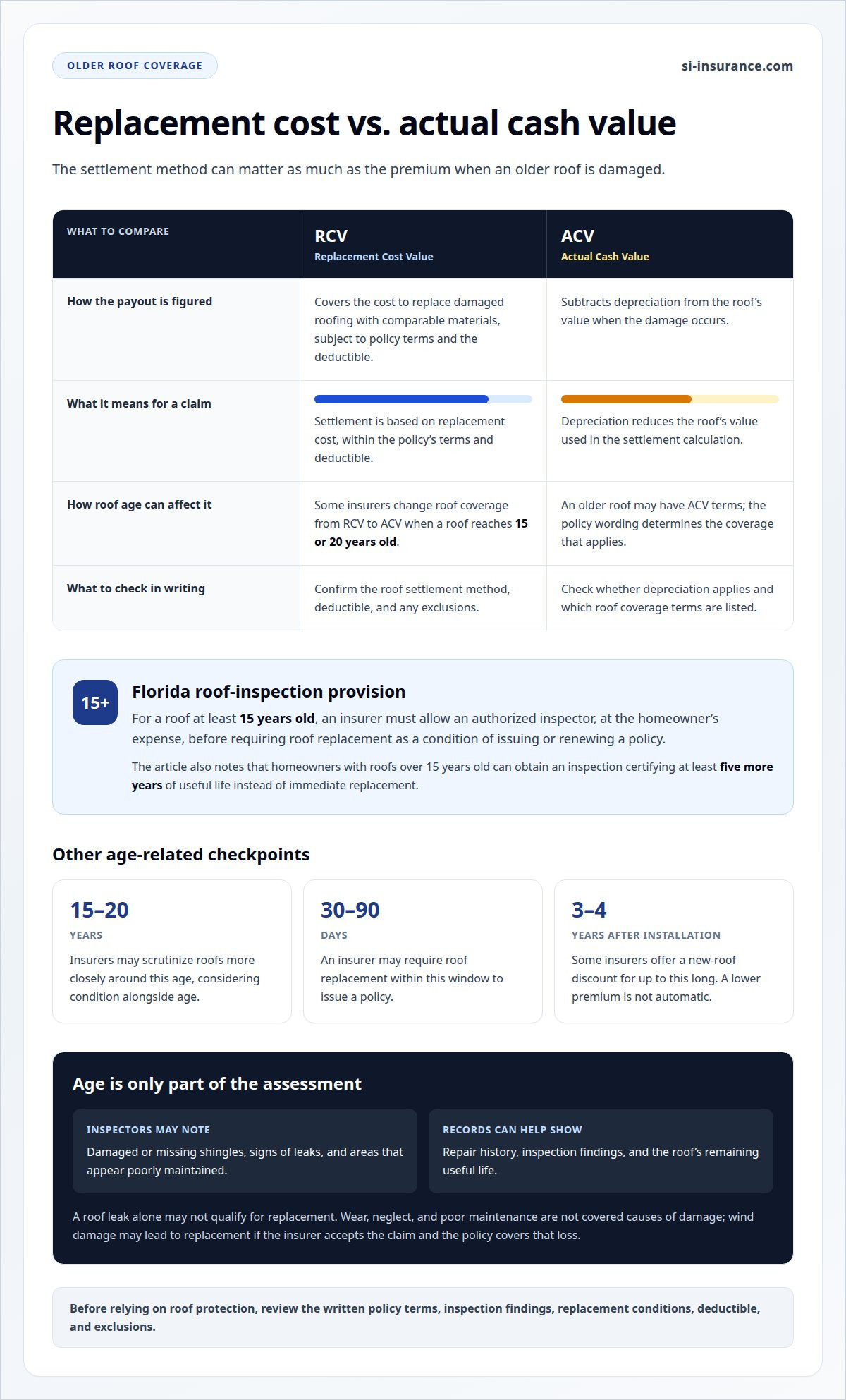
The settlement method matters as much as the premium. Replacement Cost Value (RCV) covers the cost to replace damaged roofing with comparable materials, subject to policy terms and the deductible. Actual Cash Value (ACV) subtracts depreciation from the roof’s value when damage occurs. Some insurers change roof coverage from RCV to ACV when a roof reaches 15 or 20 years old.
Replacement estimates depend on the roof and project scope. Roof-replacement grants are separate from homeowners insurance: program criteria determine eligibility, not the policy’s settlement method. A grant may help with replacement expenses, but it does not change what insurance covers in a later claim.
Timing can also affect a new application. Insurers may require roof replacement within 30-90 days to issue a policy. That deadline makes the written terms important: identify whether replacement is a condition of issuance, what roof coverage applies meanwhile, and whether the policy has exclusions. Missing those distinctions can leave the homeowner expecting replacement-cost protection when the policy provides only depreciated value.
Will insurance cover a 20-year-old roof?
A 20-year-old roof can still be insured, but age, condition, and policy terms affect eligibility and protection. Insurers may inspect it, limit roof coverage, or decline a new policy.
Insurance Options for Older Roofs
If private insurers decline a home because of roof age, replacement or coverage through a substandard insurer may be options. The roof’s assessed remaining life helps shape that decision: a roof with one year or no useful life remaining may need replacement or substandard coverage. Age alone and poor remaining condition do not lead to identical outcomes. The policy’s roof terms also determine how damage claims are handled.
Insurer Age and Condition Restrictions
Age-based restrictions are underwriting rules that can limit eligibility or change roof protection as a roof gets older. Insurers scrutinize roofs more closely around 15 to 20 years, considering condition alongside age. A roof leak alone may not qualify for replacement, while wind damage may lead to replacement if the insurer accepts the claim and the policy covers that loss. Wear, neglect, and poor maintenance aren’t covered causes of damage.
Coverage Considerations for Homebuyers
For homebuyers, insurance eligibility is a practical factor when evaluating a property with an older roof. Before finalizing a purchase, review available policy terms, inspection findings, roof age, and any replacement conditions. A report on remaining useful life can help explain the roof’s condition, while maintenance records can distinguish a properly maintained roof from one with unresolved issues. These details can also inform discussions about roof replacement during the transaction.
Florida Law and Roof Coverage
Florida’s inspection provisions set a process, not a blanket promise of coverage based on age or condition. According to the Florida Legislature, for a roof at least 15 years old, an insurer must allow an authorized inspector, at the homeowner’s expense, before requiring roof replacement as a condition of issuing or renewing a policy. According to the Florida PACE Funding Agency, homeowners with roofs over 15 years old can obtain an inspection certifying at least five more years of useful life instead of immediate replacement. A review of home coverage options can help connect these inspection findings with policy terms.
Roof condition factors insurers inspect
For an older roof, insurers assess its visible condition and maintenance history. Inspection findings can affect underwriting, renewal terms, and claim handling.
Roof Condition and Maintenance
A roof inspection records visible deterioration that could affect its ability to protect the home. Inspectors may note damaged or missing shingles, signs of leaks, and areas that appear poorly maintained. These observations give underwriters a clearer picture than age alone. A 20-year-old roof with documented repairs presents a different record from one with visible damage and no maintenance history. Keep repair invoices and inspection reports together, so the roof’s condition can be considered during underwriting or renewal.
Inspection Records and Documentation
Inspection documentation describes the roof’s observed condition and remaining useful life. For a 25-year-old roof, a licensed roofer or inspector can assess how much useful life remains. Florida insurers determine which inspection forms they accept, and the insurer or report terms determine how long documentation remains valid. A wind mitigation inspection answers a different question: it records wind-resistant features, rather than simply certifying overall roof condition. A 20-year-old roof’s age alone does not establish whether it passes; the documented features and inspection criteria matter.
Nonrenewal and Wind Mitigation Inspections
An insurer may decide not to renew a policy after an inspection identifies an older roof that needs replacement. The report can explain the decision by documenting specific condition concerns, rather than age alone. If the policy changes to actual cash value coverage, the settlement calculation changes too, so read the renewal terms alongside the inspection findings. Addressing documented problems can support a clearer underwriting review, but it does not erase the roof’s condition or guarantee renewal. Keep the inspection, repair records, and insurer notices together for future claims discussions.
Coverage options for a 20-year-old roof
For homeowners getting coverage for a home with a 20-year-old roof in West Palm Beach, possible arrangements include standard roof protection, restricted coverage, or coverage after replacement. The carrier’s decision depends on policy terms, roof condition, and material. Compare how the policy handles roof damage, settlement, and wind exclusions; its overall limit alone won’t explain how a claim involving aging shingles may be settled.
One possible arrangement is actual cash value coverage for the roof. Some carriers offer only this settlement basis for roofs older than 20-25 years. Depreciation can reduce the amount payable, so a claim may not cover the full cost of new materials. Other policies may retain replacement cost coverage, subject to their terms and deductible. An asphalt roof and one made from another material may receive different underwriting treatment because expected lifespan and condition vary.
Restrictions can also depend on the cause of loss. Some policies exclude wind and hail damage for roofs that are 18 years old or older, while others may limit roof coverage differently. Review exclusions and roof endorsements carefully. A matching clause may provide for full replacement when damaged or discontinued shingles cannot be matched, rather than a partial repair. That distinction can change how a claim is resolved.
Replacing the roof may broaden available coverage, but material and installation records remain relevant to underwriting. A roofing contractor’s documentation can establish what was replaced and when. For a West Palm Beach home with an aging roof, compare the available terms with the implications of replacement. Consider actual cash value, wind limitations, and covered causes of damage before selecting protection. Review home coverage options with those roof-specific terms in mind.
SI Insurance: Home Insurance
SI Insurance can help homeowners consider Home Insurance options for a West Palm Beach property with an older roof. If you have an inspection report, repair records, or renewal terms, those details can help frame the discussion around roof condition, settlement basis, and coverage limitations. The aim is to understand how policy terms relate to the home, not to assume every 20-year-old roof will receive the same treatment.
When reviewing coverage, check whether roof damage is settled at actual cash value or replacement cost, and whether wind or other roof-specific exclusions apply. These differences matter when assessing protection for an aging roof and planning for repairs or replacement. Contact SI Insurance Agency to discuss Home Insurance options for your home.
Make Your Next Coverage Decision With Clarity
Getting coverage for a home with a 20-year-old roof in West Palm Beach is easier to approach when the roof’s condition and the policy’s terms are considered together. The next step is to discuss how your home’s specific circumstances align with available homeowners coverage, so you can make a considered decision about protection and future roof planning.
SI Insurance can also help households considering Auto Insurance, Motorcycle Insurance, or Boat Insurance alongside their home coverage. For a focused conversation about your situation, contact SI Insurance about roof coverage. A clear review can help you move forward with greater confidence.
Frequently Asked Questions
Does roof condition matter more than roof age?
Insurers consider both age and condition, using the roof material to put its age in context. Metal and asphalt-shingle roofs have different expected lifespans, so the same age can indicate different remaining useful life. Inspection findings and repair history also give underwriters specific information about the roof, beyond its installation date.
How does an insurance company verify roof age?
An insurer can use an inspection and available roof records to assess age and condition. Repair invoices or installation documents can help establish when work occurred, while a roofing contractor can estimate age from the roof itself. Experienced contractors can estimate a roof’s age within 2-3 years. Keeping dated records together makes it easier to explain differences between a reported age and an inspection estimate.
How many shingles need to be missing for insurance to replace a roof?
There is no single missing-shingle count that automatically requires an insurer to replace a roof. Claim decisions depend on the cause and extent of damage, the policy’s covered perils, and its terms. A small area of missing shingles does not by itself mean the entire roof qualifies for replacement. Matching provisions can matter if damaged or discontinued shingles cannot be matched.
What is considered an old roof?
Home insurers generally consider a roof older than 15 years to be old, but material affects how age is assessed. Standard asphalt composition shingles typically have an expected useful life of around 20 to 30 years, while metal roofing can last 40-70 years. These ranges describe expected lifespan, not an automatic insurance cutoff; inspection findings and maintenance history help clarify the roof’s remaining service life.
What makes a roof uninsurable?
Serious deterioration or little useful life remaining can make a home difficult to insure. If an assessment finds one year or no years of useful life, replacement or coverage through a substandard insurer may be needed. Active damage, unresolved leaks, or poor maintenance can also affect underwriting decisions. “Uninsurable” describes an insurer’s decision, not a universal label based solely on roof age.
Which West Palm Beach insurers cover homes with a 20-year-old roof?
Acceptance varies by carrier, so no single insurer is the right fit for every West Palm Beach home. SI Insurance Agency offers Home Insurance and can help connect homeowners with coverage options. The roof’s material, inspection findings, and requested policy terms shape the available choices. For a local home, gather roof records and inspection details to support a focused coverage discussion.
Comments