


How to Insure a Gainesville Home With Knob and Tube Wiring
In Florida, active knob-and-tube wiring can prevent a home from qualifying for standard homeowners insurance. For Gainesville homeowners, the first step is to find out whether the wiring is still active: as of April 2026, a complete rewire is the only stated path to coverage for a home with active wiring.
If you’re concerned that an older electrical system could complicate coverage, whether the wiring is active or inactive matters. Knob-and-tube wiring uses separate conductors and lacks the grounding found in modern systems, so its condition and status can affect an insurer’s assessment.
This article explains what knob-and-tube wiring is, why it can raise underwriting concerns, and what Florida homeowners should understand about eligibility, inspections, and replacement. It also explains why coverage options may differ when wiring is no longer active, so you can approach the decision with a clearer picture of what comes next.
Table of Contents
What Is Knob and Tube Wiring?
Knob-and-tube wiring was commonly used in homes from the late 1800s through the 1940s. It has two separate conductors: a hot wire and a neutral wire. The wiring was designed for 15-amp circuits and installed in free air so heat could dissipate. Unlike modern wiring, it has no ground wire. These features help distinguish original wiring from newer electrical work added during renovations.
Florida insurers’ requirements vary, so there is no single certificate that applies to every home. A four-point inspection can identify knob-and-tube wiring, while an electrician’s assessment can document the electrical system’s condition. A licensed electrician can also certify the entire system, a useful record when an insurer evaluates active wiring.
An inspection should examine more than whether old wiring is present. An electrician can assess exposed conductors, insulation condition, later modifications, and whether newer electrical work connects to original circuits. For example, insulation covering wiring designed to dissipate heat in open air may affect the assessment. The report should distinguish active wiring from wiring that has been disconnected.
After a rewire, keep the electrician’s written scope of work and documentation showing which wiring was replaced. Retain permit records and final inspection documents as well, since they help establish what work was completed and inspected. Electrical work should be assessed against applicable code standards, and the electrician’s report should identify any remaining knob-and-tube wiring. Together, these records give an insurer a clearer basis for reviewing the home’s electrical system and coverage eligibility.
Insurers that may consider homes with knob-and-tube wiring
Insurer decisions depend on whether the wiring is active, its condition, and the home’s electrical risk profile. Florida eligibility is especially restrictive when knob-and-tube wiring is active.
Insurer Options for Older Wiring
Some insurers may consider homes with knob-and-tube wiring, while others decline them or charge more. Acceptance can depend on whether the wiring is active, properly maintained, and documented by an electrician. A home with disconnected wiring presents a different underwriting picture from one still using the original circuits. These differences help explain why coverage decisions vary.
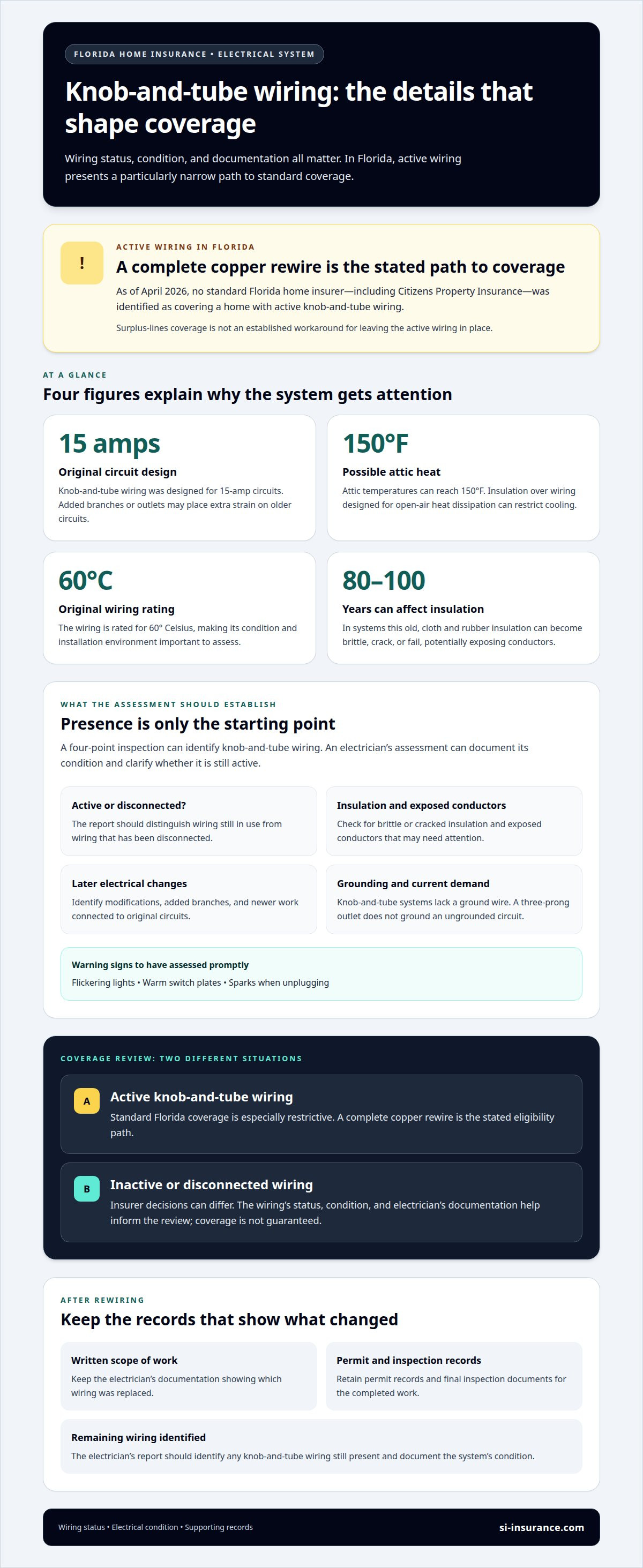
For active wiring in Florida, the options are narrower. As of April 2026, no standard Florida home insurer, including Citizens Property Insurance, was identified as covering a home with active knob-and-tube wiring. A complete copper rewire is the stated path to coverage.
Fire Risk in Underwriting
Insurers consider knob-and-tube wiring a possible fire hazard because age, damage, and later alterations can affect safe operation. The original method relied on wires separated in open air to dissipate heat. Attic insulation covering those wires can restrict cooling, while added branches or outlets may increase strain on older circuits.
Condition matters as much as wiring type. Brittle or cracked insulation can expose conductors, and poorly installed modifications can create overheating concerns. An electrician’s assessment helps identify specific hazards instead of treating every older home alike. That detail can inform an insurer’s evaluation of the property.
Finding Coverage Through Florida Markets
Citizens Property Insurance is not a standard-market solution for a Florida home with active knob-and-tube wiring. As of April 2026, the stated route to eligibility is a complete copper rewire; surplus-lines coverage is not an established workaround for leaving active wiring in place.
After rewiring, retain the electrician’s documentation and records of completed inspections. These can clarify what was replaced when coverage is reviewed. A broader home insurance options review can help frame the coverage decision alongside the home’s electrical status.
Why aging insulation and lack of grounding may create risks
Knob-and-tube wiring typically uses copper conductors wrapped in cloth and rubber insulation. In systems that are 80 to 100 years old, that insulation can become brittle, crack, or fail. Exposed conductors can contact combustible materials, turning deterioration into a fire hazard. An electrician’s assessment can identify damaged sections and later alterations that increase concern.
Heat is another factor in Florida homes. Attic temperatures can reach 150 degrees, while knob-and-tube wiring was designed to dissipate heat in open air. Attic insulation placed over the wires can restrict airflow and accelerate deterioration. The original wiring is rated for 60° Celsius, making its condition and installation environment important parts of a safety assessment.
Grounding is a separate concern. Knob-and-tube systems lack the third ground wire found in modern wiring, so they don’t provide the same path for fault current. Installing a three-prong outlet does not ground an ungrounded circuit. Modern breakers also don’t create a ground connection; the circuit’s actual wiring determines whether one exists.
Electrical demand can add stress. Appliances used together may exceed an older circuit’s capacity, while extra branches or outlets added incorrectly can overheat conductors. Flickering lights, warm switch plates, or sparks when unplugging are warning signs that need prompt attention from a qualified electrician. Have brittle or cracked insulation assessed for replacement rather than covering it with attic insulation or concealing it during renovations.
Rewiring can be expensive, but the decision involves more than the visible condition of one outlet. A professional evaluation should consider insulation, grounding, circuit modifications, and the home’s current electrical demand. These details clarify whether the system can remain safely in service or needs replacement, and provide a fuller basis for addressing electrical risks.
Florida insurance eligibility for homes with active knob-and-tube wiring
For owners asking how to insure a home with knob and tube wiring in Gainesville, the key underwriting distinction is whether the wiring is active. That status shapes the next steps and the records insurers review.
Eligibility With Active Wiring
As of April 2026, no standard Florida home insurance carrier, including Citizens Property Insurance, will insure a home with active knob-and-tube wiring. A complete copper rewire is the stated path to coverage. For an inactive system, some insurers may allow 30 to 60 days after policy inception for professional removal.
Timing can matter during a purchase. For active wiring, an insurer may require removal before closing or within 30 days after closing. A four-point inspection can identify outdated wiring, while an electrician’s report can clarify which circuits remain in service. These records help distinguish a continuing electrical risk from wiring that has been disconnected.
Coverage Terms and Renewal
Wiring status can affect an insurer’s decision to accept an application, continue a policy, or set conditions. A four-point inspection can flag outdated wiring, which may contribute to Florida insurance declines or non-renewals. Homeowners policies generally cover wiring through dwelling insurance, but the policy terms determine how a particular loss is treated.
Before relying on coverage, review the policy for applicable exclusions, deductibles, and renewal conditions. Disclose the wiring status accurately to avoid misunderstandings during underwriting. If replacement work is completed, keep the electrician’s records with permit and inspection documents so the file reflects the work performed and the resulting electrical status.
Owners planning for insurance on a Gainesville home with knob-and-tube wiring can organize those records before discussing coverage options. Review home insurance options as part of that planning.
SI Insurance: Home Insurance
SI Insurance Agency offers Home Insurance for Gainesville homeowners reviewing their needs after determining the electrical system’s status and applicable eligibility requirements. For active wiring, the stated path to standard Florida coverage is a complete rewire. Any coverage discussion should reflect whether that work has been completed and documented.
For a home with replaced or inactive knob-and-tube wiring, clear electrician and inspection records can support a more informed coverage review. Coverage terms depend on the property and its wiring condition. If you’re ready to discuss your home coverage needs, contact SI Insurance.
Make Your Next Coverage Decision With Clarity
A clear plan for how to insure a home with knob and tube wiring in Gainesville starts with a practical question: what needs attention before you pursue coverage? Keep the home’s electrical records and insurance questions organized to make the next discussion more focused, whether you’re planning a renovation, buying an older property, or reviewing your current protection.
SI Insurance Agency offers Home Insurance for homeowners considering their coverage needs. Other offerings include Auto Insurance, Motorcycle Insurance, and Boat Insurance, which may be relevant when reviewing household protection more broadly. Discuss your home’s documented electrical status with an agent so you can understand what information may be needed for coverage.
Contact SI Insurance about your home to discuss your coverage needs and determine a sensible way forward. Bring your electrical records and questions so the discussion can focus on your property.
Frequently Asked Questions
Does homeowners insurance cover electrical wiring?
Homeowners policies generally cover electrical wiring through dwelling coverage, but protection depends on the policy and the circumstances of a loss. For example, damage involving a wiring failure may be treated differently from damage caused by another covered event. Review the policy’s exclusions and conditions to understand how electrical-system damage is handled, rather than assuming every repair or replacement is covered.
Which home insurance companies in Gainesville, Florida cover homes with knob-and-tube wiring?
As of April 2026, no standard Florida home insurance carrier, including Citizens Property Insurance, will insure a home with active knob-and-tube wiring. Some insurers may consider homes where the wiring is inactive, but acceptance varies. No specific company names are established here for Gainesville properties, so the key distinction is whether the original wiring remains in service.
What do Florida insurers require to insure a home with knob-and-tube wiring?
For active knob-and-tube wiring, the stated path to coverage is a complete copper rewire. A four-point inspection can identify outdated wiring, while an electrician’s assessment and certification can document the system’s status. For inactive wiring, some insurers may allow 30 to 60 days after policy inception for professional removal. The required documentation and conditions depend on the home’s wiring status.
Can a Gainesville home with knob-and-tube wiring get standard homeowners insurance or only specialty coverage?
A Gainesville home with active knob-and-tube wiring does not qualify for standard Florida homeowners insurance under the stated eligibility information. A complete copper rewire is the identified route to coverage. The available information does not establish specialty coverage as an alternative for a home that still uses active wiring, so distinguish an inactive system from one still serving the home.
Does Florida law require homeowners to replace knob-and-tube wiring to get insurance?
The rewire condition for active wiring is an insurance eligibility requirement, not a legal obligation for every Florida homeowner. Knob-and-tube wiring itself is not illegal, but insurers can set underwriting criteria that affect whether they accept a home. A carrier’s coverage requirements and legal requirements are separate questions.
Comments