


How to Challenge a Low Insurance Offer in Tampa
A low insurance offer does not necessarily reflect the full cost of repairing your property. If you're trying to figure out how to respond to a low insurance offer in Tampa, start by reviewing how the insurer calculated its offer and whether its investigation captured the full extent of the damage.
It’s understandable to expect a settlement to reflect the loss you can see, especially when the estimate omits repairs or values them differently from your own assessment. Reviewing the policy, the insurer’s findings, and supporting estimates can help pinpoint where the two valuations differ.
This guide explains how to assess a property claim, review the damage investigation, and prepare a written counteroffer supported by organized records. It also covers ways to identify overlooked or undervalued items and explain your position using documented damage rather than frustration alone.
Table of Contents
How Can You Challenge an Insurance Company’s Lowball Offer?
Compare the insurer’s reasoning with the policy and your records, then respond in writing. If you’re unsure how to respond to a low offer in Tampa, request a written breakdown before deciding whether to accept.
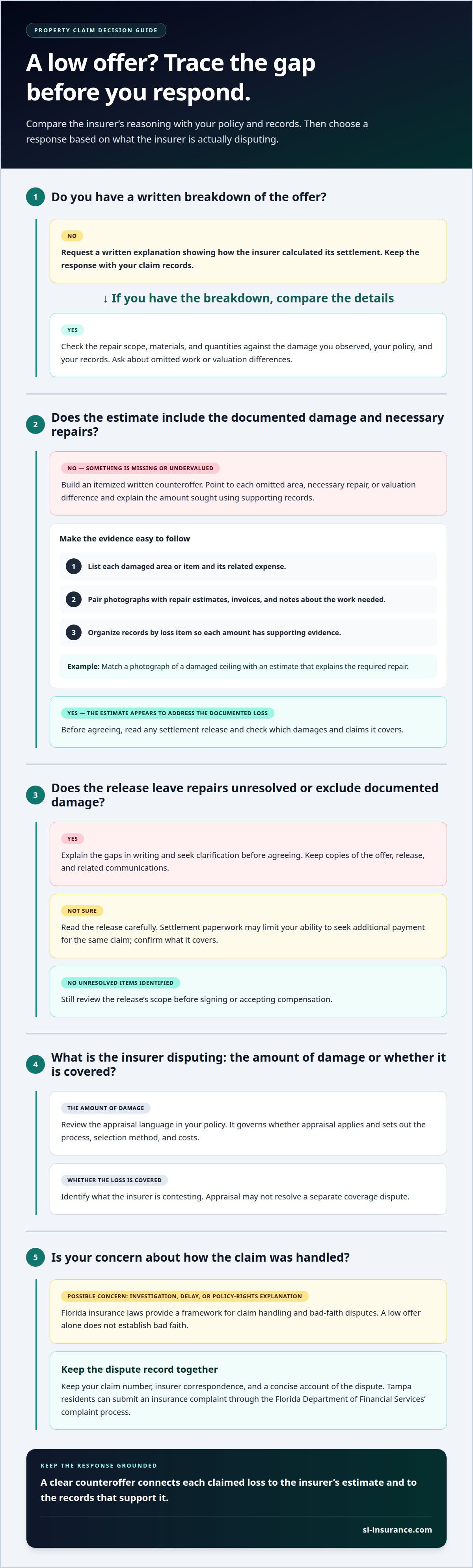
Review the Offer and Its ReasoningRequest a written breakdown showing how the insurer calculated its settlement. Some insurers may start with a low offer to leave room for negotiation or encourage a quick acceptance. For property damage, compare the estimate’s repair scope, materials, and quantities with the damage you observed and your records. Ask the insurer to explain omitted work or valuation differences, and keep its response with your claim documentation.
Identify an Inadequate SettlementCompare the proposed payment with the policy terms and documented repair needs, not just the total. An offer may be inadequate if it excludes damaged areas, overlooks necessary repairs, or relies on an estimate that does not address the documented loss. Tampa-area storm, flood, or hurricane damage can make disputes more complex when the parties disagree about cause or scope. Organize photographs, estimates, and claim records to show specifically where the offer falls short.
Consider the Risks of Signing a ReleaseRead any release before signing or accepting compensation. Settlement paperwork may limit your ability to seek additional payment for the same claim, so confirm which damages and claims it covers. If the offer leaves repairs unresolved or excludes documented damage, explain the gaps in writing and seek clarification before agreeing. Keep copies of the offer, release, and related communications.
Review Settlement Practices and Complaint OptionsFlorida insurance laws set a framework for claim handling and bad-faith disputes. Concerns may involve an unreasonable investigation, delay, or misrepresentation of policy rights, but a low offer alone does not establish bad faith. Tampa residents can submit an insurance complaint through the Florida Department of Financial Services’ complaint process. Keep your claim number, insurer correspondence, and a concise account of the dispute together to explain your concerns if further review is needed.
Calculating the value of a property insurance claim
Estimate covered property losses using documented damage, repair needs, and policy terms. Keep personal injury valuation separate, since it involves different considerations from property costs.
Assess the Full Claim ValueCreate an itemized estimate of property damage, including necessary repairs and other tangible losses related to the claim. Compare each item with the policy language and available estimates, and note anything omitted from the insurer’s calculation. For a separate personal injury claim, relevant considerations include medical expenses, lost income, prognosis, work capacity, and pain and suffering. Keep these injury considerations separate from property damage.
Get an Attorney’s Claim-Valuation OpinionConsider legal assistance if the insurer continues to delay, deny, or undervalue your claim. A lawyer can organize evidence, assess documented losses, and develop an argument for compensation, including how policy provisions relate to the dispute. For injury claims, prognosis and effects on work can influence valuation. A demand letter should connect the requested amount to records rather than rely on an unsupported figure.
Consider Professional Valuation OptionsConsider a public adjuster or insurance claim attorney if the damage assessment is complex or the insurer’s estimate remains difficult to resolve. Before hiring either professional, review the written engagement terms and clarify the fee basis and any expenses. Charges depend on the agreement and work involved. Do not assume that personal injury attorneys’ contingency arrangements apply to property claims; the terms of your agreement control.
Explore the Appraisal ProcessFor a disagreement about the amount of damage, review the appraisal language in your policy before pursuing that option. The policy governs whether appraisal applies and sets out the process, selection method, and costs. Distinguish a valuation dispute from a disagreement about whether the policy covers the loss. Appraisal may not resolve a separate coverage dispute, so first identify what the insurer is contesting.
Preparing a written counteroffer and supporting documents
Support your counteroffer with records linking each claimed loss to the insurer’s estimate. For a property claim, organize damage evidence and itemized expenses; include medical or financial records only when they relate to the claim.
Review and Document the DamagesList each damaged area or item and its related expense in a claim inventory. Pair photographs with repair estimates, invoices, and notes describing the work needed. For example, match a photograph of a damaged ceiling with an estimate explaining the required repair. Organize records by loss item so the insurer can see how each amount supports your counteroffer.
Gather Supporting EvidenceGather photographs, videos, witness statements, and reports relevant to the loss. For a car accident claim, these may include scene images, a police report, and eyewitness accounts. For property damage, take images of affected areas and keep documents that help explain the damage. If daily activities are affected, keep a dated log of specific limitations rather than relying on general statements.
Compile Medical and Financial RecordsIf the claim includes injuries, gather medical records and itemized bills documenting visits, procedures, prescriptions, and therapy. Employer letters or tax documents can help record lost earnings or reduced work capacity. Keep these records separate from property repair expenses, and label each document with the loss it supports. A personal injury lawyer may help organize injury evidence when that part of the dispute requires legal assistance.
Prepare the Written CounterofferWrite a concise response identifying the disputed estimate items, explaining why each amount is insufficient, and stating your counteroffer. Support each item with relevant documentation, such as a repair estimate paired with photographs of the damage. Include relevant claim facts and policy provisions, and keep the tone professional. Save a complete copy of the letter and its attachments with your claim records.
How insurers investigate claims and assess damages
An adjuster investigates a claim, assesses damages, and determines liability when relevant. Compare the insurer’s findings with the actual loss and the policy terms.
Organize the claim timeline before reviewing the investigation. Match the reported loss date, first notice, inspection notes, and any repair work against your records. A clear sequence can reveal whether the adjuster considered key events, such as when water intrusion appeared or which rooms were affected. Note any factual discrepancies for follow-up.
Compare the adjuster’s damage description with each affected area. If an estimate includes a ceiling repair but omits related wall damage, note the difference and support it with dated photographs or a contractor’s findings. This comparison can show whether the assessment reflects the full visible scope, rather than only what was observed during the initial inspection.
Check how the estimate describes the repair work. Compare quantities, materials, and tasks with your repair estimates and damage evidence. A mismatch, such as an estimate that addresses only part of a damaged surface, gives you a specific question to raise. Ask the insurer to explain its reasoning in writing.
Separate damage findings from coverage decisions. The adjuster’s assessment describes the loss; the policy language determines what coverage may apply. Identify which items the insurer included, excluded, or valued differently, then connect each disputed item to a policy provision or record. This makes negotiations more precise than simply saying the settlement feels low.
Use the investigation as a comparison point, not the final measure of your loss. A documented repair estimate, photographs, and a clear explanation can support a counterproposal addressing actual covered damages. Policyholders deserve a reasoned review of the evidence. For future protection planning, review home insurance coverage options.
SI Insurance
SI Insurance offers Home, Auto, Motorcycle, and Boat Insurance to address different property and vehicle needs. Reviewing coverage is separate from disputing an insurer’s claim decision, so keep your claim records and counteroffer focused on the issues described above. If you’re reviewing your protection, consider which property or vehicle you want to insure and what coverage fits your needs.
Contact SI Insurance to discuss your insurance coverage needs.
Turn the Claim Experience Into a Clearer Plan
A disputed claim can also prompt a broader review of how insurance fits your property, vehicles, and plans. When deciding what to do when your insurance company lowballs your claim in Tampa, keep the immediate claim process separate from future coverage decisions. Reviewing a policy will not resolve an existing settlement dispute, but it can help you make informed choices about protection going forward.
Si Insurance Agency offers Auto Insurance, Motorcycle Insurance, and Boat Insurance. As you consider your next steps, identify the property or vehicle risks you want future coverage to address, then discuss those needs with the agency. Coverage decisions are separate from ongoing claim negotiations.
Contact SI Insurance for help with your insurance needs.
Frequently Asked Questions
Should You Accept the First Settlement Offer?
Accept a settlement only after you understand what it resolves and how the amount relates to your documented loss. For example, if a repair estimate later identifies damage omitted from the insurer’s scope, a signed release could limit your ability to seek additional compensation. Read the release carefully, note unresolved items, and get written clarification before agreeing to terms you do not understand.
How Do Insurers Calculate Your Settlement Value?
Insurers assess reported damage, relevant evidence, and applicable policy terms when making an offer. For a property claim, the evaluation may depend on which areas were damaged, what repairs are proposed, and whether records support those repairs. If the insurer’s estimate differs from a contractor’s estimate, compare the scope line by line to find the source of the difference.
What Are the Warning Signs of a Bad-Faith Lowball Tactic?
A fast offer may warrant closer review if it arrives soon after an accident, before medical treatment has run its course. Other concerns include an insurer failing to conduct a reasonable investigation, misrepresenting policy rights, or unreasonably delaying payment. Keep dated communications and claim documents together to distinguish a valuation disagreement from conduct that raises broader concerns.
What Compensation Should You Receive in Your Car Accident Settlement?
A car accident settlement may include medical expenses, lost wages or earning capacity, property damage, and out-of-pocket costs. Pain and suffering may also be considered in an injury claim; wrongful-death damages may apply in a wrongful-death claim. The relevant categories depend on the losses supported by your records. Keep vehicle repair expenses separate from medical and income-related losses when reviewing an offer.
What Does Insurance Bad Faith Mean?
Insurance bad faith generally refers to conduct such as failing to investigate reasonably, misrepresenting policyholder rights, or unreasonably delaying payment. In liability matters, concerns may also include failing to defend an insured or settle a claim against them. A disputed amount alone does not explain the insurer’s conduct; the claim history and communications provide important context.
What Legal Options Exist to Challenge a Low Offer?
You can continue written negotiations, submit a complaint through the Florida Department of Financial Services, or consult an attorney about the dispute. For a disagreement specifically about property damage valuation, review whether your policy provides an appraisal process. If negotiations stall, a lawsuit may be an option. The appropriate route depends on whether the dispute concerns the amount, coverage, or claim handling.
Comments