


How Much Liability Insurance Does a New LLC Need in Florida?
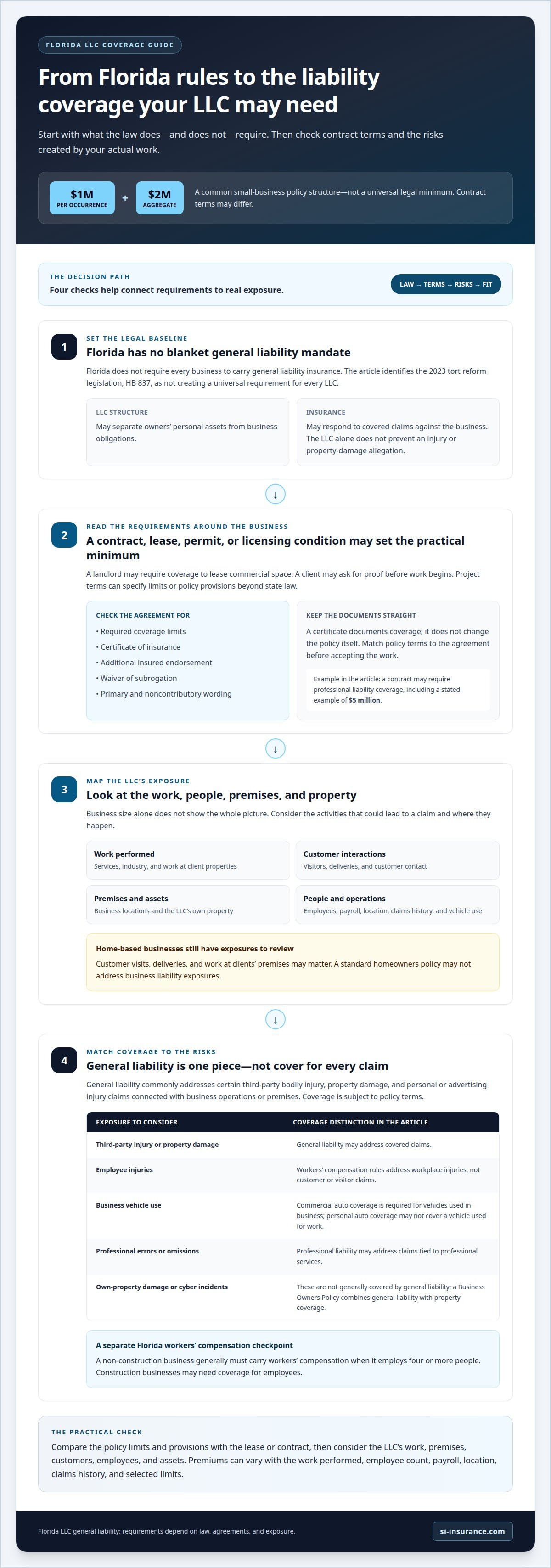
Forming an LLC doesn’t determine how much protection your business needs. Florida doesn’t require every business to carry general liability insurance, and how much liability insurance a new LLC needs in Florida depends on its exposures and contract terms. A common policy structure is $1 million per occurrence and $2 million aggregate, but that isn’t a universal legal minimum.
It’s understandable to want a clear number before opening your doors. The useful starting point is to distinguish legal obligations from requirements set by a landlord, client, or project agreement, then consider the risks specific to your operations.
This article explains when a contract may require general liability coverage, what policy limits mean, and how your work, premises, customers, employees, and assets shape your exposure. These factors help you judge whether a required limit fits your business or whether you may want a different level of protection.
Table of Contents
Is general liability insurance required by law in Florida?
Florida has no blanket state law requiring every business to carry general liability insurance. An LLC’s legal structure and business insurance serve different purposes: the LLC may separate owners’ personal assets from business obligations, while insurance may respond to covered claims against the business. That separation does not prevent a customer from alleging injury or property damage.
Florida’s 2023 tort reform legislation is identified as HB 837, according to the Florida Legislature. It does not create a universal general liability insurance requirement for every LLC. A common small-business policy has a $1 million per-occurrence limit and a $2 million aggregate limit, though contracts may set different terms.
General liability commonly addresses third-party bodily injury, property damage, and personal or advertising injury claims connected with business operations or premises. For example, a customer might allege injury after slipping at a shop, or a business could face a property-damage claim after work at a client’s site. Coverage is subject to policy terms.
General liability generally does not cover employee injuries, damage to the business’s own property, auto accidents, professional errors, or cyber incidents. Professional liability may address claims tied to professional services, while a Business Owners Policy combines general liability with property coverage. The right coverage depends on the LLC’s activities and exposures.
Premiums vary with factors such as the work performed, employee count, payroll, location, claims history, and selected limits. Averages can hide these differences, so an insurance professional can compare quotes using consistent limits and details about the LLC’s actual operations. Contracts may also require specific limits or policy provisions.
A new Florida LLC can work with an insurance professional by sharing details about its operations, premises, employees, claims history, and contract requirements. The professional can compare quotes and coverage terms, then help arrange the selected liability policy.
Home-based owners should consider customer visits, deliveries, and work at clients’ premises. A standard homeowners policy may not address business liability exposures. Reviewing the business activity and policy terms can help identify where general liability or other coverage may be relevant.
Florida legal requirements and contractual requirements
Florida’s workers’ compensation rules depend on the business’s industry and staffing. A non-construction business generally must carry workers’ compensation when it employs four or more people. Construction businesses may need workers’ compensation coverage for employees. These rules address workplace injuries, not third-party claims involving customers or other visitors.
Commercial auto coverage is required for vehicles used in business. A personal vehicle used for work may not be covered under a personal auto policy, creating an exposure separate from general liability. If an LLC uses vehicles for deliveries or client visits, consider commercial auto requirements alongside its other insurance obligations.
Contracts and leases can set requirements beyond state law. A commercial landlord may require general liability coverage as a condition of leasing space, while a client may request proof before work begins. A certificate of insurance documents coverage, but does not change the policy itself.
Project terms may also require an additional insured endorsement, a waiver of subrogation, or primary and noncontributory wording. Each provision affects how coverage responds among the parties if a lawsuit alleges injury or property damage. The contract may also specify professional liability coverage for errors or omissions, including an example requirement of $5 million. Match policy terms to the agreement before accepting the work.
For example, a Florida LLC leasing a storefront could face a landlord’s insurance requirement, while a contractor bidding on a municipal project may need higher limits and specific endorsements. These terms can shape the LLC’s coverage choices even where no general state mandate applies. A focused review of business coverage needs can help align the insurance structure with the lease, project contract, and operational exposure.
Situations in which Florida businesses may need general liability insurance
A Florida LLC’s activities, premises, and customer interactions help determine its liability exposure. General liability may be especially relevant when customers visit, employees work at client sites, or contracts require proof of coverage.
General and Professional Liability
General liability addresses certain third-party bodily injury, property damage, and personal or advertising injury claims; professional liability addresses claims involving professional errors or omissions. The distinction matters because a consultant accused of giving an incorrect recommendation faces a different allegation from a customer injured at a retail location. Match policy types to the claims your work could produce, rather than treating one policy as protection for every risk.
Coverage for Industry and Business Activities
An insurance professional can assess an LLC’s industry, services, premises, customers, and contracts to identify relevant coverage needs. A contractor working at client properties, for example, faces different liability exposures from a home-based consultant. This review can also identify whether vehicle use or professional services call for separate policies.
Florida has no blanket statewide general liability requirement for every business, but a contract, lease, permit, or licensing condition may require coverage. A client agreement can set limits or request proof before work starts. Those terms may determine the practical minimum for a specific project, even when state law imposes no universal requirement.
Premiums vary with the LLC’s work, employee count, payroll, location, claims history, and selected limits. An average premium may therefore fail to reflect a particular Florida LLC’s operations. A retail business with customer foot traffic and a consultant working remotely have different risk profiles, even if both are newly formed.
For an LLC’s industry and activities, an insurance professional can weigh likely claim scenarios, contract limits, and assets that could be exposed. They can compare quotes using consistent limits and deductibles, then explain how each option affects the LLC’s financial responsibility after a covered claim. Higher limits may be appropriate when a serious claim could exceed the selected protection.
Factors affecting liability exposure in Florida
Liability exposure reflects what an LLC does, where it operates, and who may be affected. A consultant working remotely faces different bodily injury risks from a contractor entering customers’ properties. General liability coverage should reflect actual operations, not simply the company’s new status or legal structure.
Customer access and business premises matter. A shop with regular foot traffic faces potential injury allegations that a home-based business with no visitors may not. In Central Florida, businesses receive around 50 inches of rainfall per year, making wet entrances a practical example of a premises hazard to consider.
Employees can change the exposure profile through their number, experience, and assigned duties. Work at client locations may create risks beyond those at the LLC’s own premises. Revenue, business size, customer types, and location also inform an insurer’s assessment, while claims history can affect coverage terms and premiums.
Assets help frame the financial consequences of a serious claim. A business with $3 million in assets and steady revenue may need higher liability limits than a startup with minimal physical assets. The potential severity of bodily injury or property damage claims also matters. Umbrella liability insurance can provide additional protection when a claim exceeds a primary policy’s limits.
Vehicle use creates a separate exposure. Using a personal automobile for business may leave the owner without coverage under a personal auto policy. Commercial auto insurance addresses a different risk category from general liability, so include the LLC’s vehicle use in its overall review.
Review the LLC’s activities, premises, employees, assets, and vehicles annually, since risks can change as operations grow. For a structured review of these exposure factors, discuss your business risk profile before selecting liability limits.
SI Insurance
SI Insurance can help Florida LLC owners assess business insurance needs in light of their operations, premises, contracts, and potential claims. This is a useful next step when you are forming an LLC, preparing to sign a lease, or reviewing coverage after your business changes. A focused discussion can help clarify how liability protection fits your circumstances and where separate personal or vehicle coverage may also matter.
Bring details that shape your exposure, such as the work you perform, customer interactions, employee roles, and relevant contract requirements. SI Insurance also offers Auto Insurance, Motorcycle Insurance, Boat Insurance, and Home Insurance for related personal coverage needs.
Contact SI Insurance to discuss your insurance needs.
Set Your Coverage Strategy in Motion
Choosing how much liability insurance a new LLC needs in Florida is part of building a durable risk strategy, not simply completing a startup task. As operations evolve, new services, employees, customer relationships, and contract terms can change the exposures your original policy was designed to address. Planned reviews help keep coverage aligned with the business instead of relying on assumptions made at formation.
SI Insurance offers Business Insurance alongside Auto Insurance, Motorcycle Insurance, and Boat Insurance, supporting coverage discussions across business and personal needs. If your work involves vehicles or valuable personal assets, considering those exposures alongside business risks can help build a more coordinated picture of protection.
Use your next coverage conversation to clarify your operations, priorities, and upcoming obligations. Reviewing those details can help shape a suitable liability coverage approach. Contact SI Insurance about LLC coverage to discuss a suitable path forward, and move ahead with greater confidence in your decisions.
Frequently Asked Questions
What Is LLC Insurance and Why Do You Need It?
LLC insurance is a set of policies selected to address risks tied to a limited liability company’s work, property, and obligations. For example, a business that stores equipment at a rented workspace may face different exposures from one operating remotely. Coverage choices depend on the LLC’s activities, and policy terms determine which incidents qualify for a claim.
Does an LLC Protect You From Personal Liability?
An LLC provides a legal structure that can separate business obligations from owners’ personal affairs, but it does not eliminate every personal risk. Insurance serves a separate purpose: it may help address covered claims against the business. Owners should consider how the company operates, what obligations they personally assume, and whether business coverage addresses risks associated with their role.
LLC Liability Insurance: What’s the Damage (to Your Wallet)?
Insurance costs depend on the LLC’s industry, work, location, employee count, claims history, and selected limits. A new business with limited operations may present a different risk profile from one handling customer property or serving clients at their premises. An insurance professional can compare quotes using consistent coverage terms, helping owners understand what affects the premium and what each policy covers.
Should My LLC Get a Business Owner’s Policy (BOP)?
A Business Owners Policy combines general liability coverage with property coverage and may also include business income insurance. Consider it when an LLC has both third-party liability exposure and business property to protect. For instance, a small retailer with inventory and customer visits may have both concerns. The policy’s specific terms determine which property and income losses qualify.
Is general liability insurance legally required for an LLC in Florida?
Florida does not impose a blanket statewide requirement for every LLC to carry general liability insurance. However, a lease, client agreement, permit, or licensing condition may set its own requirement. For example, an LLC pursuing a project may need to meet the contract’s insurance terms before work begins, even without a universal state mandate.
What liability insurance limits are required for Florida LLCs by law or local regulations?
Florida has no single general liability limit that applies to every LLC statewide. A lease, contract, permit, or local-government project may set a required limit or request specific policy wording. The applicable requirement depends on the business activity and the relevant agreement or project. Review those terms alongside the LLC’s operations to identify the limit that applies.
Comments