


Deciding Between a Direct Insurer and a Local Independent Agency
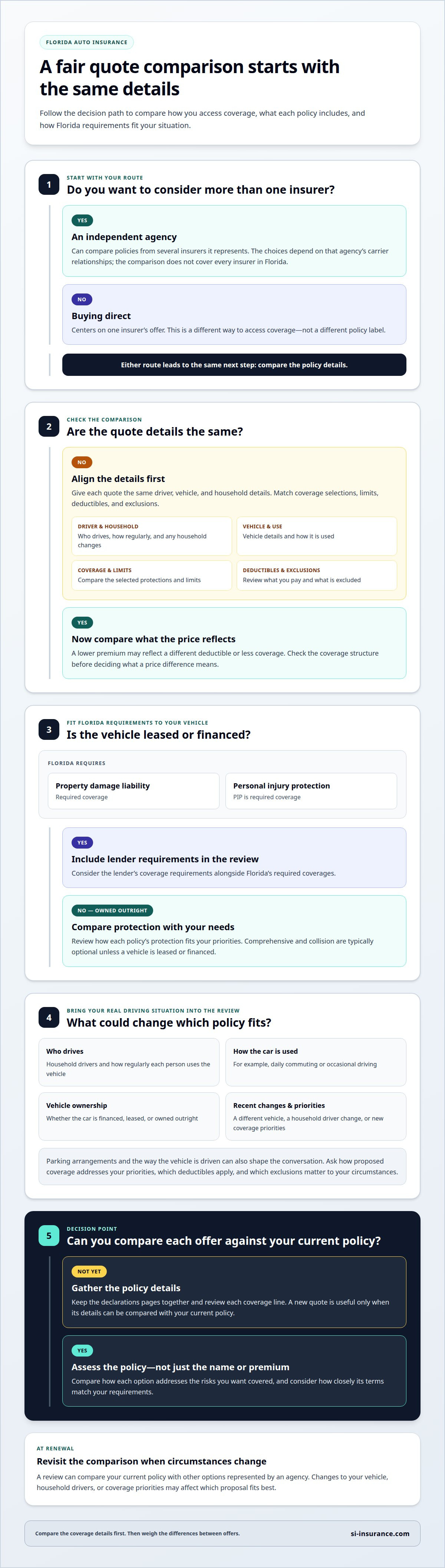
For Florida drivers comparing a major national carrier with an independent agency, the key difference is choice: an independent agency can compare policies from several insurers it represents, while buying direct means considering one insurer’s coverage. Florida requires property damage liability and personal injury protection (PIP). The decision is not just about the company name, but about how each option fits your coverage needs.
It’s reasonable to value a familiar insurer and a straightforward way to arrange coverage. An independent agency can provide options from multiple represented insurers and revisit them at renewal. This article explains how the two approaches differ, what to compare in a policy, and how Florida’s required coverages fit into the decision, so you can assess which route better suits your circumstances.
Key Takeaways
An independent agency can compare policies from multiple insurers it represents, giving you more than one option to consider.
Compare coverage details and how each policy fits your needs, not just the insurer’s name or quoted premium.
Florida’s required coverages are part of the decision; understanding how they fit with your broader protection can help you assess options.
Use a clear comparison process to evaluate an insurer’s offer against the guidance and policy choices available through a local agency.
Table of Contents
Independent agents work with multiple insurance companies
An independent agent can compare policies from several insurers the agency represents. That creates a choice across represented companies, rather than one insurer’s available options. The comparison does not cover every insurer in Florida. Each agency’s carrier relationships define which policies it can present. Independent agents work for customers rather than a single insurance company. A direct purchase, by contrast, centers on one insurer’s offer. These are different ways to access coverage, not identical policy labels.
Use a consistent comparison process. Provide the same driver, vehicle, and household details for each quote, then compare the coverage selections, limits, deductibles, and exclusions in each proposal. A lower premium, for example, may reflect a different deductible or less coverage. Matching the details helps show whether a price difference comes from the insurer or the policy structure. Compare how each option addresses the risks you want covered, not just the headline price.
Include Florida’s requirements in your review. The state requires property damage liability and personal injury protection (PIP). Comprehensive and collision coverage are typically optional unless a vehicle is leased or financed. If you’re financing a car, consider the lender’s coverage requirements alongside state requirements. If you own the vehicle outright, compare each policy’s protection with your needs. The policy documents, not the insurer’s name, set out the selected terms.
An agency’s relationships with multiple insurers can also matter at renewal. Ask for a review of your current policy and a comparison with other represented options. Changes to your vehicle, household drivers, or coverage priorities may affect which proposal fits best. A new quote is useful only if you can compare its details with your current policy. Keep the declarations pages together and review each coverage line before choosing.
In short, an independent agency offers access to multiple insurers it represents, while buying direct focuses on one insurer. The practical benefit depends on the options available and how closely each policy matches your requirements. For a fair comparison, align the coverage details first, then assess the differences between offers.
Matching drivers with a local independent agency
A useful agency conversation starts with your actual driving situation, not a generic profile. A Florida driver who commutes daily may prioritize different policy features from someone who drives occasionally. Household drivers, vehicle use, parking arrangements, and recent changes can all shape the discussion. Local knowledge can help make the conversation relevant to Florida drivers, but it does not replace a careful review of policy terms.
Before discussing options, prepare a concise picture of your circumstances:
Describe who drives the vehicle and how regularly each person uses it.
Explain whether the car is financed, leased, or owned outright.
Identify protections you want to consider beyond required coverage.
Share relevant changes, such as a different vehicle or household driver.
These details give an agent a clearer basis for guidance. Financing may bring lender requirements into the decision, while owning the vehicle outright means weighing coverage against your priorities. If a household member regularly shares the car, explain that directly. Specific details make the policy discussion more relevant to how the vehicle is actually driven.
Local knowledge is most useful when it informs practical questions, not when it replaces careful policy review. Ask how proposed coverage addresses your priorities, which deductibles apply, and which exclusions matter to your circumstances. An independent agent can explain differences among represented insurers’ options and help you weigh the trade-offs. Buying direct may suit someone who prefers working with one company; an agency offers another route, with guidance based on your situation.
For a structured starting point, use this Florida insurance guidance to organize your questions. Bring a clear account of your driving habits and coverage priorities, then use the discussion to identify which policy details deserve closer attention. That preparation can make your comparison more focused and help you move toward a decision that reflects your needs.
Which independent insurance agencies in Florida offer auto insurance from multiple carriers?
When comparing an independent agency with Liberty Mutual, look for an agency that offers auto insurance and identify which insurers it represents. Those relationships determine which policies it can present. Ask whether it can quote your vehicle and driver profile with each relevant insurer. A list of company names alone is not enough: the agency must be able to compare coverage suited to your circumstances.
Separate state licensing from access to insurance carriers. Blake Insurance Group LLC lists Florida among the states where it is licensed to sell insurance. That establishes a Florida licensing connection, but does not show which auto insurers it represents. A careful comparison distinguishes an agency’s authority to sell insurance from its specific carrier appointments. Both details matter.
The independent agencies represented here belong to the Independent Insurance Agents & Brokers of America. For a practical review, request a side-by-side explanation of the insurers available for your situation. Ask which options match the same vehicle, drivers, coverage selections, and deductibles. If one carrier cannot quote your profile, the remaining proposals may not provide a balanced comparison. Keep the scope consistent.
Use this short screening sequence:
Identify the agency as independent, rather than tied to one insurer.
Ask which represented companies can provide an auto quote for your profile.
Compare the proposed coverage terms, not just insurer names.
Record which companies could not provide a relevant proposal.
This process helps clarify whether an agency can offer a meaningful multi-carrier comparison or only a narrow set of suitable options. It also keeps Liberty Mutual in perspective as one insurer to compare, rather than treating its brand name as a substitute for reviewing policy terms. Focus on the proposals available to you, then weigh their coverage and conditions side by side.
The National Association of Insurance Commissioners reported a national average auto insurance expenditure of $1,281 per insured vehicle in 2023. That national figure can provide context, but an agency’s available quotes and the coverage terms in each proposal remain specific to your situation. Car rental companies commonly offer temporary insurance for rental vehicles used by visitors to the United States, a separate consideration from comparing auto policies for your own vehicle.
Checking agencies and insurers before buying
Before choosing a policy, assess both the agency and the insurer. Start by checking the agency’s Florida license through the state’s insurance licensing records. Then identify which insurers it represents for auto coverage. These checks answer different questions: licensing concerns authority to sell, while carrier relationships show which policies the agency can present. A carrier list does not establish that each insurer can quote your specific driver and vehicle profile.
Review each proposal as a document, not just a premium figure. Compare the named insureds, vehicles, selected coverages, limits, deductibles, exclusions, and effective dates. If a proposal changes any of these details, note the difference before comparing it with another offer. Two quotes with different deductibles, for example, do not have the same financial terms after a covered loss. The declarations page provides a useful summary of selected coverage.
Confirm the agency’s Florida license and the insurer issuing each policy.
Check that every proposal reflects the same drivers and vehicles.
Compare limits, deductibles, exclusions, and effective dates line by line.
Save the proposals and note any differences that need explanation.
Review how the policy handles changes during its term, too. A replacement vehicle or newly added household driver can affect the information on file. Read the policy documents for instructions on reporting changes and note which contact handles service questions. Keep the agency’s role distinct from the insurer’s: the agency may arrange coverage through represented companies, while the insurer issues the policy and sets its terms.
Use the same checklist for a Liberty Mutual proposal and agency options. That keeps the decision focused on documented coverage, rather than assumptions about a brand or sales channel. For help organizing your next coverage review, review your insurance options with a consistent comparison in hand.
Drivers across Florida should consult the state’s Department of Insurance website to learn what car insurance is required. Use that guidance when reviewing proposals.
SI Insurance: Auto Insurance
SI Insurance is a local option for Florida drivers considering an agency for auto insurance. After comparing Liberty Mutual’s direct proposal with agency options, bring your priorities to a focused discussion about coverage, vehicle use, household drivers, and the policy details that matter to you. SI Insurance also offers motorcycle, boat, and home insurance if you’re reviewing related coverage needs.
Use the comparison criteria in this article to guide the conversation. Keep your proposed coverages and deductibles clear, and note any questions that remain. This connects your decision to your circumstances rather than relying on an insurer’s name alone.
Visit SI Insurance online to learn more or get in touch.
Make your next comparison more deliberate
The choice between Liberty Mutual and an independent agency for Florida car insurance is best treated as a question of fit, not a default based on familiarity. Before moving forward, write down the coverage priorities you’re unwilling to compromise on and the policy details you want clarified. This keeps the next discussion focused and makes it easier to assess whether a proposal meets your needs.
SI Insurance can be a next point of contact if you want to discuss auto coverage alongside your personal circumstances. Your specific situation will shape which options are appropriate, so bring the questions that remain from your comparison and use them to guide the conversation.
Contact SI Insurance for help as you consider your next step. A clear set of priorities can make the decision feel more manageable.
Frequently Asked Questions
Why Choose an Independent Agent?
Choose an independent agency if you value guidance across the insurers it represents. This can be useful when a household has several drivers or a vehicle’s use has changed, because you can discuss those details and how they affect available proposals. The agent’s options are limited to represented insurers, so focus on whether the policies fit your priorities, not simply on the number of company names presented.
What should Florida drivers check before switching car insurance companies or using an independent agent?
Before switching, compare the new policy’s effective date with the end date of your existing coverage to avoid an unintended gap. Confirm that the proposal correctly identifies each driver and vehicle, and review the coverage selections and deductibles. Keep the final policy documents and confirmation of the new coverage before ending your existing policy.
Comments