


Commercial Auto Insurance in Broward County for Employee Coverage
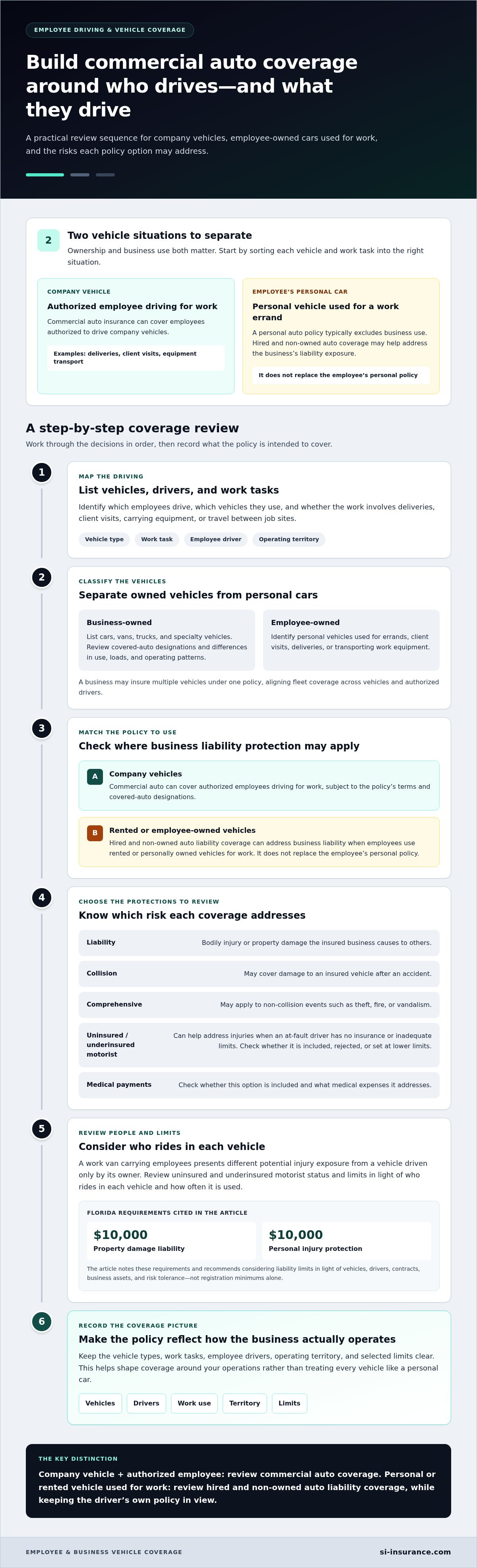
Employees may be covered under commercial auto insurance in Broward County when they’re authorized to drive company vehicles. If employees use personal cars for work, hired and non-owned auto protection may be needed. A personal auto policy typically excludes commercial use, so both vehicle ownership and how the vehicle is used matter.
A business policy may protect employees driving for work, but coverage depends on the vehicle and its use. A company vehicle used for deliveries, client visits, or equipment transport presents different considerations from an employee’s car used for a work errand.
This article explains how employee coverage, liability protection, uninsured and underinsured motorist coverage, and Florida requirements fit together. It also covers how business vehicle use and North Broward operations shape coverage needs, so you can identify key decisions before arranging protection for your business.
Table of Contents
Can My Employees be Covered Under Commercial Auto Insurance?
Yes. Commercial auto insurance can cover employees authorized to drive company vehicles. For employees using personal cars for work, hired and non-owned auto coverage may help address the business’s liability exposure.
To understand how commercial auto coverage may fit your business’s vehicles and drivers, watch this overview:
Employee Use of Personal Vehicles
An employee’s personal auto policy typically excludes coverage when the vehicle is used for business. If an employee drives their own car to visit a client, deliver goods, or carry work equipment, hired and non-owned auto coverage may protect the business against liability arising from that use. It doesn’t replace the employee’s personal policy. Identify which work tasks involve personal vehicles and consider how the business would respond to a claim involving bodily injury or property damage.
Work Trucks, Vans, and Fleets
Commercial auto policies can cover cars, vans, trucks, and specialty vehicles used for work, including deliveries and equipment transport. A business may insure multiple vehicles under one policy, aligning fleet coverage across vehicles and authorized drivers. Before choosing coverage, list each vehicle to be insured and review the policy’s covered-auto designations. Account for differences in use, loads, and operating patterns, such as those between a delivery van and a work truck.
Protection for Business Vehicles
Commercial auto coverage is designed for vehicles used in business, including transporting goods, visiting clients, and hauling equipment. Depending on the policy, options may include liability for bodily injury and property damage, plus collision and comprehensive coverage for owned vehicles. Collision may cover damage to the insured vehicle after an accident; comprehensive may apply to non-collision events such as theft, fire, or vandalism. The selected coverage determines which risks the policy addresses.
Business use changes the risk: a company vehicle may carry equipment, travel between job sites, or be driven by several employees. Personal auto coverage typically isn’t designed for these work tasks, and a gap can complicate an accident claim. Commercial auto insurance in Broward County can reflect how the business actually uses its vehicles. Document vehicle types, work tasks, employee drivers, operating territory, and selected limits. These details help shape coverage around your operations rather than treating every vehicle like a personal car.
Uninsured and underinsured motorist coverage
Uninsured and underinsured motorist coverage can help address injuries when an at-fault driver has no insurance or inadequate limits. For a business vehicle in South Florida, review whether this coverage is included, rejected, or set at lower limits.
Start by identifying the people and vehicles exposed to road risks. For example, a delivery driver could be injured in a company vehicle after a collision with an uninsured motorist. The policy’s uninsured or underinsured motorist terms determine whether protection applies and which limits are available. Don’t assume this coverage is included automatically; review its status and limits deliberately.
Compare the selected limits with the business’s operations, not just the vehicle’s value. A work van carrying employees presents different potential injury exposure from a vehicle driven only by its owner. Consider who rides in each vehicle and how often it is used, since bodily injury claims can affect employees and business finances. Make sure the policy clearly reflects these exposures.
Uninsured motorist coverage: Review whether the policy includes it or records its rejection.
Underinsured motorist coverage: Identify its limits and how they apply when another driver’s coverage is insufficient.
Medical payments: Check whether this option is included and what medical expenses it addresses.
Liability coverage: Distinguish protection for injuries or damage caused to others from coverage for your own vehicle or occupants.
Collision coverage may reimburse repair costs for an insured vehicle after an accident. Comprehensive coverage addresses certain non-collision losses, including fire, theft, and vandalism. For example, collision may apply if a covered crash damages a company car, while comprehensive may apply if the car is stolen. These coverages address damage to the insured vehicle, unlike uninsured motorist coverage, which covers a different risk.
Medical payments coverage is another option to consider alongside liability coverage. It may help with medical expenses after an accident, while liability coverage addresses bodily injury or property damage the insured business causes to others. Understanding the difference helps you assess whether the policy addresses employee injuries, third-party claims, and vehicle repairs.
Hired and non-owned auto liability coverage can address business liability when employees use rented or personally owned vehicles for work. It doesn’t replace a subcontractor’s own commercial auto policy. If a subcontractor drives to a job site, review the contractual insurance terms separately; the business’s hired and non-owned coverage serves a different purpose. A review of commercial auto coverage can help organize these coverage decisions around your business vehicles and work-related driving.
Commercial auto liability and property damage protection
Commercial auto liability coverage addresses bodily injury and property damage a business vehicle causes to others in an accident. In Florida, commercial vehicle insurance requires at least $10,000 in property damage liability coverage.
Florida PIP and Bodily Injury Liability
Florida personal injury protection, or PIP, is a first-party benefit for covered medical expenses and lost wages. It covers 80% of medical expenses and 60% of lost wages, up to the stated total limit of $10,000, and includes a $5,000 death benefit. PIP doesn’t replace bodily injury liability, which concerns injuries caused to others.
For a Fort Lauderdale business, keep these distinctions clear when reviewing accident risks. PIP addresses specified expenses for covered people, while bodily injury liability may respond when the business is legally responsible for another person’s injuries. Consider both, rather than treating PIP as a substitute for liability protection.
Accident Damage and Liability Claims
Liability coverage may pay for property damage or bodily injury caused to others when the insured business is at fault. For example, if a company van damages another vehicle during a delivery, property damage liability may apply to the claim. The policy terms and limits determine the protection available.
Damage to the business’s own vehicle is a separate consideration. Collision coverage may reimburse repairs after an accident, while comprehensive coverage may apply to covered non-collision events such as theft, fire, or vandalism. Review these separately to distinguish third-party claims from repairs to company vehicles.
Bodily Injury Liability Requirements
Florida generally doesn’t require drivers to carry bodily injury liability insurance, but drivers with a DUI conviction or those considered high-risk must carry it. Businesses should distinguish this general rule from their contractual and operational exposure. For example, a client contract may require insurance beyond the vehicle registration minimum.
Choose liability limits based on contracts, vehicles, drivers, business assets, and risk tolerance. If your business is pursuing contracts, account for their insurance requirements when planning coverage. The registration minimum alone may not reflect the potential financial impact of a serious injury claim or multiple parties seeking compensation.
Liability for Hired and Non-Owned Autos
Hired and non-owned auto liability coverage can address business liability when employees use rented or personally owned vehicles for work. An employee driving a personal car to a Fort Lauderdale client meeting, for example, presents a different risk from an employee driving a company van. Identify both situations during a policy review.
This coverage doesn’t replace a subcontractor’s own commercial auto policy. If a subcontractor drives a personal vehicle to a job site, review the contract’s insurance and indemnity terms alongside the subcontractor’s auto certificate. This helps distinguish your business’s exposure from the subcontractor’s coverage responsibilities.
Is commercial vehicle insurance mandatory in Florida?
Florida requires commercial vehicles to carry at least $10,000 in personal injury protection (PIP) and $10,000 in property damage liability coverage. The requirements discussed here apply to Florida businesses, including those operating in Broward County.
Trucks, vans, and rideshare vehicles don’t have identical coverage requirements based on vehicle type alone. Consider how the vehicle is used, the business’s operations, and any applicable contracts when assessing coverage.
Florida Commercial Vehicle Requirements
Florida’s minimum commercial vehicle requirements include $10,000 in PIP coverage and $10,000 in property damage liability coverage. PIP covers 80% of medical expenses and 60% of lost wages, up to the stated total limit of $10,000, and includes a $5,000 death benefit.
Florida generally doesn’t require drivers to carry bodily injury liability, except for drivers with a DUI conviction or those considered high-risk. A business should distinguish this minimum from limits suited to its contracts, vehicles, drivers, and assets. A delivery company, for example, may assess its liability exposure differently from a business using one vehicle for occasional site visits.
Requirements for Trucks, Vans, and Rideshare Vehicles
For a work van or truck, consider how it’s used, what it carries, and who drives it. Commercial auto insurance is designed for work-related driving, while businesses operating 18-wheel trucks can benefit from commercial trucking insurance. A vehicle’s classification and operations help shape the relevant coverage decisions.
Rideshare driving involves commercial use, but there is no separate Broward County minimum established here for rideshare vehicles. Assess the vehicle’s actual use and any applicable contract terms when considering coverage. Florida requirements don’t change based on a business’s city or county location.
To apply, organize information about the business and its driving risks. A practical file can include vehicle details and ownership, employee driver information, business operations, operating territory, claims history, and the limits you’re considering. Insurers commonly evaluate these factors, so accurate details help align coverage with actual use.
Keep vehicle and driver details consistent throughout the application. Note whether a van makes deliveries, transports equipment, or visits customer locations. If the business has several vehicles, list each one and its intended use instead of treating the fleet as a single operating profile. This helps distinguish commercial driving from personal use.
Florida doesn’t require bodily injury liability for every driver, but that minimum may not address a company’s full exposure. Compare legal minimums with contract terms and the potential impact of an injury claim. This matters for independent businesses as well as larger operations seeking protection for work-related driving.
Commercial auto insurance service areas in North Broward County
Businesses in North Broward County need coverage decisions that reflect where vehicles travel, what they do, and who drives them. A locally based company may also send employees beyond its home community, so include territory and operating radius in the insurance review.
Which insurers offer commercial auto insurance in Broward County? Florida insurers and agencies serving the county offer commercial auto coverage, with available options shaped by the business, vehicles, drivers, operations, and selected limits. Comparing policy terms means looking beyond a company name to understand how liability, vehicle damage, and work-related driving are addressed.
To request a quote, gather details insurers commonly evaluate: vehicle types, business use, operating territory, drivers, claims history, and desired limits. Describe each vehicle’s role accurately. A van making deliveries, for example, has a different operating profile from a car used for occasional client visits.
When planning service routes in North Broward, account for the full route, not just the business address. A driver might start in one North Broward community, visit a Fort Lauderdale client, then return with tools or inventory. Documenting the territory and operating radius gives insurers a clearer picture of vehicle use.
List each vehicle and its business purpose, including delivery, client visits, or equipment transport.
Identify employees who drive and distinguish company vehicles from personally owned or rented vehicles.
Summarize the operating territory, regular routes, and any travel beyond North Broward County.
Set out the liability limits and physical-damage options the business wants evaluated.
Choose coverage based on the vehicle’s exposure. Liability protection addresses injury or damage caused to others, while collision and comprehensive coverage may address damage to an insured vehicle under their policy terms. Florida personal injury protection is also part of the state’s auto insurance requirements. Reviewing these coverages together clarifies which risks involve other people, employees, or company vehicles.
For businesses serving North Broward communities, keep driver and vehicle details current as routes or duties change. A new delivery area or added work van can alter the business’s operating profile. An organized review helps identify which vehicles, drivers, and limits to include in a quote discussion instead of relying on outdated information.
Request a commercial auto insurance quote with your vehicle, driver, route, and coverage details ready, so the discussion can focus on your North Broward operations.
SI Insurance: Auto Insurance
SI Insurance Agency helps Broward County business owners consider commercial auto coverage in light of their vehicles, employee drivers, and work-related use. Turn to the agency when operations change, such as when you add a work van, expand delivery routes, or assign employees to drive for business. Reviewing vehicle use alongside liability and physical-damage options helps clarify how coverage fits your needs.
For personal vehicles, SI Insurance Agency also offers Auto Insurance. Other options include Motorcycle Insurance, Boat Insurance, and Home Insurance, which may be relevant when reviewing household protection alongside business risks.
To discuss your business’s vehicle coverage, contact SI Insurance.
Bring Your Coverage Decisions Into Focus
Your next step is to build a clear picture of how your business uses vehicles. Review your current policy alongside employee driving duties, business routes, and any fleet changes. This gives you a practical starting point for discussing commercial auto insurance in Broward County and identifying coverage decisions that need attention.
SI Insurance Agency can help you consider commercial auto coverage for your business. The agency also offers Auto Insurance, Motorcycle Insurance, and Boat Insurance for personal coverage needs beyond work vehicles.
When you’re ready to discuss your business’s coverage, contact SI Insurance about coverage. A thoughtful review can help you move forward with greater clarity.
Frequently Asked Questions
Can I get fleet insurance if I have multiple vehicles?
Yes, one commercial auto policy can cover multiple business vehicles. Prepare a vehicle schedule listing each vehicle’s business role and the employees who may drive it. Note any changes, such as reassigning a vehicle from local service calls to deliveries. Keeping the list current provides a clearer basis for reviewing the policy as your fleet changes.
How Much Should I Expect for Coverage?
There isn’t one standard price for every business; the cost depends on the situation and is provided after a quote request. For a useful comparison, make sure each option reflects the same vehicles, drivers, limits, and deductibles. Then consider the premium alongside what each option protects, rather than choosing on price alone. This makes differences between quotes easier to understand.
How can I lower my insurance rates?
Review the coverage structure carefully instead of simply reducing limits. Remove outdated vehicle or driver information, and make sure the described business use matches current operations. When comparing options, consider whether changing a deductible or coverage selection still fits your financial tolerance. These steps can make the evaluation more precise, but no single adjustment guarantees a lower premium.
How do carrier underwriters in South Florida evaluate rates for a Fort Lauderdale delivery or service fleet?
For a Fort Lauderdale fleet, clearly describe the work each vehicle performs, the routes it regularly follows, and how drivers are assigned. A delivery schedule with repeated customer stops differs from service calls booked by appointment. Accurately report these patterns, including changes in duties or territory, so the application reflects the fleet’s actual use rather than a generic business description.
How much commercial vehicle coverage is required?
Florida’s legal minimums are outlined in the requirements section above, but they don’t automatically determine an appropriate business limit. Review insurance terms in customer agreements, leases, and service contracts, then compare them with the vehicles and work your business handles. If a contract requires a particular limit, include it in your coverage review before choosing a policy.
What commercial auto insurance coverage is required for businesses in Florida?
Businesses must meet Florida’s applicable vehicle insurance minimums, described earlier in this guide. Beyond those requirements, policy choices depend on how vehicles are used and which risks the business wants to address. For example, a business may separately consider protection for its own vehicles, employees’ work-related driving, and claims involving other people or property.
What are Florida's commercial vehicle insurance minimum liability limits?
The minimums are stated in the Florida requirements section above. The required property-damage liability limit is not the same as a bodily injury liability limit. When reviewing a policy, distinguish limits for damage to others’ property from coverage for other risks. Contract requirements may also shape the limits a business should consider.
How much does commercial auto insurance cost in Broward County, Florida?
A Broward County business needs a quote based on its own operations; there’s no single local price for every fleet. Provide a consistent description of the vehicles and how they’re used. If comparing proposals, first align the coverage selections and deductibles. This helps show whether a lower premium reflects a real price difference or a narrower scope of protection.
Comments