


Commercial Auto Insurance for Miami Food Trucks
A food truck’s routes and service locations matter when assessing commercial auto insurance in Florida. Commercial auto insurance for a food truck in Miami can address covered vehicle damage and road-related liability. Equipment permanently attached to the truck may also be considered under the policy.
Look beyond the truck’s make and model. Grills, refrigeration units, mileage, parking routines, and service locations help describe how the business uses the vehicle. A food trailer also needs to be considered differently from a self-propelled truck.
This guide explains what commercial food truck insurance can cover, how equipment and everyday operating patterns influence assessment, and why Florida availability may differ by service area. It also outlines the information that helps a professional evaluate a food truck’s commercial auto needs, so you can approach coverage with a clearer picture of what to discuss.
Table of Contents
What Is commercial food truck insurance?
Commercial food truck insurance addresses risks from operating a mobile kitchen and using vehicles for business. Commercial auto liability can cover injuries or property damage caused to others by the insured vehicle.
Coverage for Trucks, Trailers, and Tow Units
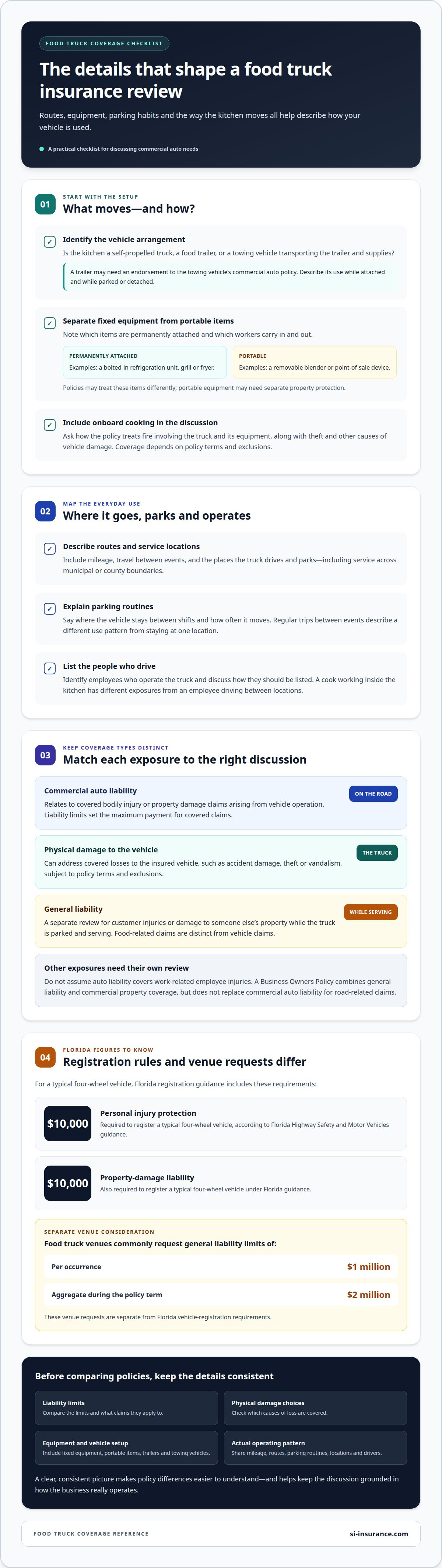
Coverage can be arranged for a self-propelled food truck, a food trailer, or a compatible towing vehicle used to transport supplies. For a Miami vendor, the key distinction is whether the kitchen moves under its own power or travels attached to another vehicle. A trailer may require an endorsement to the towing vehicle’s commercial auto policy.
Florida Highway Safety and Motor Vehicles guidance requires $10,000 in personal injury protection to register a typical four-wheel vehicle. Policies can also address vehicle damage, while coverage for permanently attached grills, fryers, or refrigeration units depends on policy terms. For onboard cooking, review whether fire coverage applies to the truck and its equipment.
Policy Exclusions and Coverage Limits
When reviewing a food truck policy, compare liability limits, covered drivers, business use, and exclusions. Ask how the policy treats fire, theft, and equipment, and whether a supply van carrying ingredients needs its own coverage. A personal auto policy may not cover business use.
Describe how the trailer is used both while attached to its towing vehicle and while parked or detached. Clarify which vehicles the policy covers and how liability applies in each situation. Medical expenses for injured workers involve separate considerations, so do not assume auto liability covers them.
Road-related bodily injury and property damage liability
On Miami routes, commercial auto liability can address covered bodily injury and property damage claims arising from vehicle operation. If the truck hits a parked car while maneuvering near a serving site, the policy may respond to a third-party claim, subject to its terms. Liability limits set the maximum payment for covered injuries or damage; they are separate from physical damage coverage for the truck.
Customer injuries and property damage require a separate review from road collisions. General liability can address claims involving someone injured or another person’s property damaged while the truck is parked and serving. For example, a customer might report an injury involving hot food or equipment, or an illness after eating a meal. These are distinct from vehicle claims.
Florida food truck venues commonly request general liability limits of $1 million per occurrence and $2 million aggregate. The per-occurrence limit applies to a covered incident, while the aggregate is the policy’s overall limit for covered claims during its term. Venue requirements can therefore affect the liability structure an owner needs for event operations.
Commercial auto physical damage coverage can address covered losses to the insured vehicle, such as damage from an accident, theft, or vandalism, subject to policy terms and exclusions. Check which causes of loss the policy covers. A Business Owners Policy combines general liability and commercial property coverage, but does not replace commercial auto liability for road-related claims. Consider each exposure separately when choosing coverage.
Assessing equipment, mileage, and parking routines
A food truck’s business use, routes, and installed equipment help describe its commercial auto needs. Mileage, operating locations, and travel between service sites form part of its operating profile. A truck that regularly travels between events is used differently from one parked at a single location. Include where it stays between shifts and how often it moves.
Equipment value and type can be relevant to the coverage discussion. Grills and fryers help describe the truck’s setup. Explain which equipment is permanently attached and which items are portable, since the policy may treat them differently.
Make an inventory that separates fixed equipment from items workers carry in and out. For example, note whether a refrigeration unit is bolted in, while a blender or point-of-sale device is removable. This distinction helps clarify which items to discuss under vehicle coverage and which may need separate property protection. Describe how the vehicle supports the business, since a personal auto policy may not address business use.
When comparing commercial auto insurance for a food truck in Miami, keep liability limits, physical damage choices, equipment, mileage, and operating details consistent. This makes policy differences easier to understand. Review whether each choice reflects the business’s actual use, rather than reducing protection without understanding what accidents or damage it addresses.
Florida food truck commercial auto availability
A food truck in Miami may travel across municipal and county boundaries to serve private events, public streets, or festivals. Describe where the vehicle drives and parks, and whether employees operate it, so the coverage discussion reflects its Florida operations and venue requirements.
Florida Highway Safety and Motor Vehicles guidance requires $10,000 in personal injury protection to register a typical four-wheel vehicle. Florida guidance also requires $10,000 in property-damage liability to register a typical four-wheel vehicle. These registration requirements do not describe every type of coverage a venue may request.
Employee roles matter when reviewing a policy. Identify staff members who drive the truck and discuss how they should be listed. A cook working inside the kitchen has different exposures from an employee driving between Florida locations. Auto liability relates to covered vehicle injuries, while work-related employee injuries involve separate considerations.
Kitchen equipment and business operations also matter when describing the truck. A permanently installed fryer differs from portable supplies, and vehicle coverage may treat them differently. Explain the truck’s use, equipment, and service locations. A detached food trailer is also a different setup from a self-propelled truck.
Before discussing coverage for a Miami food truck, gather vehicle details, driver records, routes, and service locations. Note whether the truck stays in Miami or travels to events elsewhere in Florida. This information helps frame the discussion of operating restrictions, liability needs, and how coverage relates to the mobile business.
SI Insurance: Commercial Auto Insurance
SI Insurance is a natural next step for Miami food truck operators assessing commercial auto protection. Its Commercial Auto Insurance offering addresses vehicle-related exposures associated with business driving, including liability concerns tied to operating the truck for sales and transporting supplies. A policy discussion can begin with vehicle type, business use, routes, and the people who drive. Those details help frame coverage around the truck’s actual role in the business.
This is especially relevant when a mobile kitchen changes how it operates. A truck that travels between Miami events has different driving patterns from one that remains at a regular site. A trailer, a supply-transport vehicle, or authorized employee drivers can also affect how the commercial auto policy is structured. Sharing these details helps clarify which vehicles and business activities the policy should address.
Consider vehicle and equipment protection separately. Permanently attached kitchen equipment may be treated differently from portable items, while liability coverage concerns claims involving others. SI Insurance offers commercial auto insurance for vehicles used in business. Share the truck’s routes, parking routines, and typical service activities when discussing coverage.
For a useful coverage discussion, gather vehicle information, business-use details, and driver records. Include regular event locations, supply runs, and whether the unit is self-propelled or towed. These details give the discussion a practical foundation and help identify relevant questions for your operation.
Contact SI Insurance to discuss commercial auto coverage for your food truck.
Frequently Asked Questions
How do premiums differ from personal auto policies?
Commercial auto premiums reflect business use, which may include deliveries, event travel, employee drivers, and specialized vehicle equipment. A personal policy is designed for personal driving and may not match a food truck’s operating profile. A truck traveling between service locations, for example, has different mileage and use patterns from a privately driven car. Insurers assess these details alongside the liability and physical damage coverage selected.
What documents should I provide to get a quote?
Provide the vehicle’s identifying information, describe its business use, and share records for the people who will drive it. Include regular routes, mileage patterns, and whether the truck travels with a trailer or towing vehicle. An equipment inventory can clarify which kitchen items are permanently attached. These details help insurers assess the actual operation.
What qualifies a vehicle for commercial auto coverage?
A vehicle used for business, such as transporting goods, clients, or tools, is a candidate for commercial auto consideration. A food truck that travels between service locations fits this context, as does a van carrying ingredients or supplies for the kitchen. A food cart without a motor vehicle has different insurance needs because it is not used for transportation by vehicle.
Can I insure multiple vehicles under one policy?
You can discuss multiple business vehicles together, such as a food truck and supply van. Provide each vehicle’s details, business purpose, and drivers instead of treating them as interchangeable. The policy documents state which vehicles are insured and what coverage applies. Describe a trailer in relation to its towing vehicle and use.
What commercial auto insurance coverage does a food truck need in Miami, Florida?
Start with the truck’s road use, vehicle value, and business routes. Commercial auto liability addresses covered bodily injury or property damage claims caused by the vehicle, while physical damage coverage addresses covered losses to the truck. Event venues may also request proof of general liability and an endorsement naming the venue as an additional insured. Kitchen and employee risks need separate consideration.
How can Miami food truck owners find insurers that offer commercial auto insurance?
Look for a Florida insurance agency that handles commercial auto coverage and can discuss the vehicle’s operating area, drivers, and business use. Availability can differ across service areas, so describe routes beyond Miami as well as local operations. SI Insurance offers commercial auto coverage for Florida businesses. A clear account of the truck, supply vehicles, and towing arrangements helps focus the coverage discussion.
Comments